
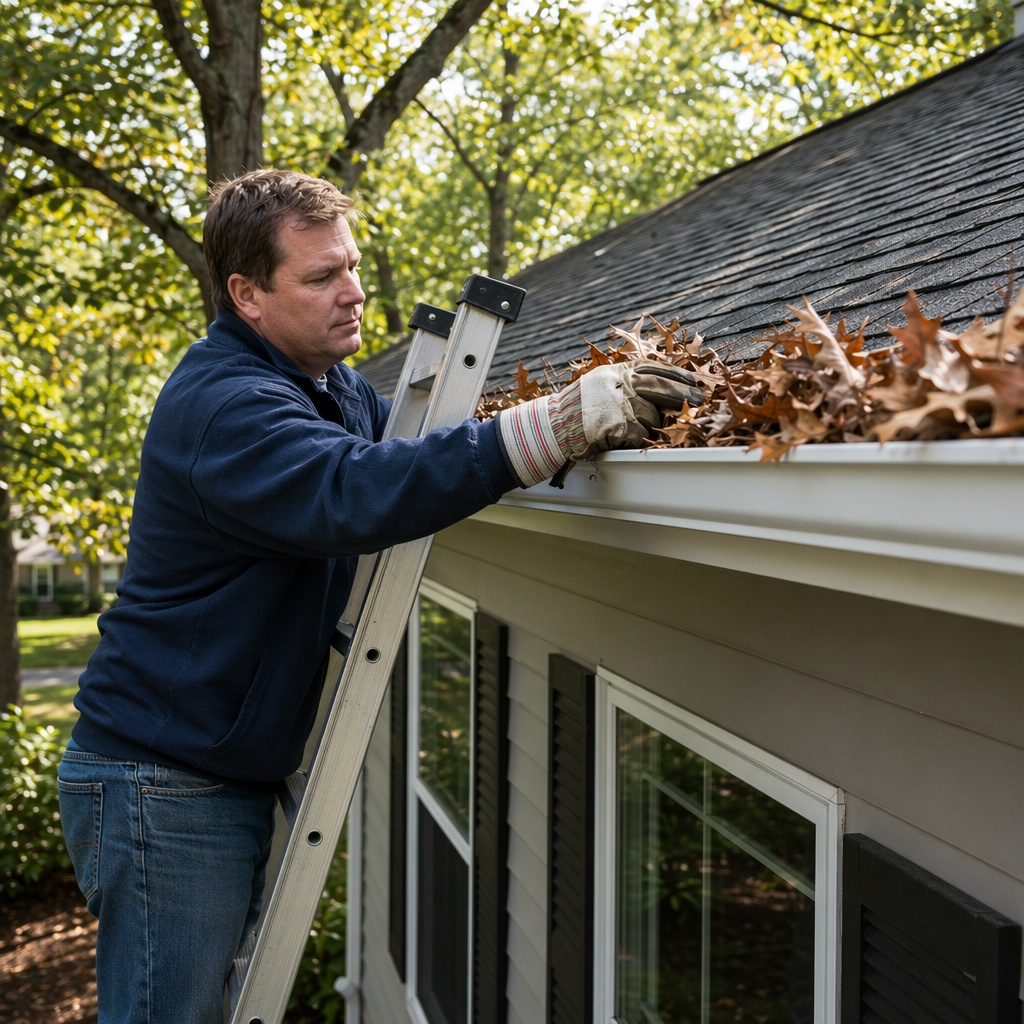
Living under a canopy of mature trees is one of the great pleasures of homeownership — until autumn arrives and your gutters disappear under a thick blanket of leaves, twigs, and pine needles. For homeowners in wooded settings, standard gutters simply cannot keep up with the volume of debris that falls throughout the year. The result is debris clogging, overflow, and eventually serious water damage to your fascia board, foundation, and landscaping.
Seamless gutters offer a meaningful upgrade over traditional sectional systems, particularly for homes where leaf fall is a constant battle. Because they are custom-fabricated on-site from a single continuous piece of material, they eliminate the joints where debris tends to accumulate and leaks tend to form. That single design difference makes a significant impact on gutter maintenance frequency and long-term performance.
This guide walks through everything you need to make a smart decision — from material choices and gutter profiles to integrated leaf protection systems and real installation costs. Whether your property is shaded by oaks, maples, or towering pines, the right seamless gutter setup can protect your home while dramatically reducing the time you spend on a ladder.
Why Seamless Gutters Matter for Tree-Surrounded Homes
Homes under heavy tree canopy face a unique drainage challenge. Leaves, seed pods, pine needles, and small branches fall continuously across multiple seasons, not just in autumn. This sustained debris load overwhelms gutters that were not designed with high-volume environments in mind.
Seamless gutters are fabricated from a single roll of material — typically aluminum — cut to the exact length of each roofline section. There are no seams except at corners and downspouts, which means far fewer points where debris can snag, accumulate, and cause blockages. This design also reduces the risk of leaks developing over time.
The absence of mid-run joints is the single most important structural advantage seamless gutters offer in leafy environments. Sectional gutters, by contrast, have joints every ten feet or so, and each one is a potential clog point and leak source.
Key Evaluation Criteria: Features, Benefits, Pricing, and User Experience
Choosing the right gutter system for a tree-heavy property means evaluating several factors simultaneously. Gutter capacity, material durability, clog resistance, and compatibility with gutter guards all matter. So does installation cost and the reputation of your installer.
- Material type and corrosion resistance
- Gutter profile and water-carrying capacity
- Compatibility with micro-mesh gutter guards
- Downspout size and placement for high debris areas
- Long-term maintenance requirements and cost
User experience data consistently shows that homeowners who invest in properly sized seamless gutters with integrated leaf protection report fewer clogs, less frequent gutter cleaning, and better overall satisfaction than those who install basic systems without guards.
Top Seamless Gutter Options for Homes with Heavy Leaf Fall
The market offers several strong seamless gutter configurations for wooded properties. The best choice depends on your specific tree types, roof pitch, rainfall intensity, and budget. Understanding the differences between materials and profiles helps you narrow down the right fit quickly.
Material Comparison: Aluminum, Steel, Copper, and Vinyl in Leafy Environments
Aluminum gutters dominate the residential market for good reason. They are lightweight, rust-resistant, affordable, and available in a wide range of colors. For homes surrounded by trees, aluminum handles the weight of wet leaves and debris well without warping or corroding. Most seamless gutter installers work primarily with aluminum because it is easy to fabricate on-site.
Steel gutters offer greater strength and are better suited to regions with heavy snowfall or ice. However, they are heavier and more prone to rust over time, especially when debris sits in them for extended periods. Galvanized steel can work well, but it requires more diligent gutter maintenance to prevent corrosion.
Copper gutters are the premium option. They are exceptionally durable, develop a beautiful patina over time, and resist corrosion naturally. For homeowners who want a long-term investment with minimal maintenance and strong curb appeal, copper is hard to beat — though the upfront cost is significantly higher than aluminum or steel.
Vinyl gutters are the least suitable for tree-heavy environments. They become brittle in cold temperatures, sag under debris weight, and are not available in true seamless form for most residential applications. They are best reserved for mild climates with minimal tree coverage.
| Material | Durability | Clog Resistance | Cost Range | Best For |
|---|---|---|---|---|
| Aluminum | High | Good | Low–Mid | Most tree-heavy homes |
| Steel | Very High | Good | Mid | Snow-heavy regions |
| Copper | Excellent | Excellent | High | Premium, long-term installs |
| Vinyl | Low | Poor | Very Low | Mild climates, minimal trees |
Best Gutter Profiles: K-Style vs. Half-Round for Homes with Trees
K-style gutters are the most common profile in North America. Their flat back and decorative front allow them to carry more water than half-round gutters of the same width, making them well-suited for high-rainfall areas and rooflines with significant pitch. They also attach directly to the fascia board, which simplifies installation.
Half-round gutters have a smooth, curved interior that allows debris to flush through more easily. This self-cleaning quality is a genuine advantage in leafy environments, particularly for homes with pine needles, which tend to mat and clog flat-bottomed gutters. Half-round profiles are also more aesthetically traditional and pair well with older architectural styles.
For most tree-surrounded homes, K-style gutters with micro-mesh gutter guards offer the best combination of capacity and clog resistance. Half-round gutters are a strong alternative for homeowners who prefer a cleaner look and are willing to accept slightly lower water volume capacity.
Recommended Gutter Sizes and Downspout Configurations for High Debris Areas
Standard residential gutters come in five-inch and six-inch widths. For homes under heavy tree canopy, six-inch gutters are strongly recommended. The additional gutter capacity handles both higher debris loads and heavier rainfall without overflow.
Downspouts should be sized at three by four inches rather than the standard two by three inches. Larger downspouts reduce the chance of blockages caused by leaf clumps and seed pods. Placement matters too — downspouts should be positioned at every corner and at intervals no greater than thirty feet along long gutter runs.
Adding a downspout strainer at each outlet is a simple, low-cost step that significantly reduces interior clogging. These mesh inserts catch large debris before it enters the downspout, making gutter cleaning faster and less frequent.
Integrated Gutter Guard and Leaf Protection Solutions
Gutter guards are not optional for homes surrounded by trees — they are essential. The right leaf protection system can reduce gutter cleaning from four times per year to once annually, or even less. The key is matching the guard type to your specific debris profile.
Micro-mesh gutter guards are the gold standard for high-debris environments. They feature a fine stainless steel mesh that allows rainwater to pass through while blocking leaves, pine needles, and even small seed pods. They work well with both K-style and half-round profiles and are compatible with most aluminum and copper seamless gutter systems.
Reverse-curve guards work by directing water around a curved surface and into the gutter while debris falls off the edge. They perform well with large leaves but struggle with pine needles and fine debris. Foam and brush inserts are low-cost options but tend to trap debris inside the gutter, creating a different kind of clog problem.
Features, Benefits, Pricing, and Real-World User Experience
Understanding what you are paying for — and what real homeowners experience after installation — helps set realistic expectations and avoid costly mistakes.
Durability and Low-Maintenance Design: What to Look For
A well-installed seamless aluminum gutter system should last twenty years or more with basic maintenance. Look for gutters with a factory-applied baked enamel finish, which resists fading and chipping better than field-painted alternatives. Gutter hangers should be hidden and spaced no more than two feet apart to prevent sagging under debris weight.
Fascia board condition matters more than most homeowners realize. If the fascia is rotted or damaged, even the best gutter system will fail prematurely. Always have the fascia inspected before installation and replaced if necessary.
Clog Resistance and Drainage Performance Around Trees
Clog resistance is the defining performance metric for gutters in wooded settings. Debris clogging leads to standing water, which adds weight, promotes rust, and eventually causes gutters to pull away from the fascia. It also creates conditions for mosquito breeding and wood rot.
Seamless gutters with micro-mesh guards consistently outperform unguarded systems in independent drainage performance tests. If you are researching options for a multi-level property, the top gutter picks for two-story homes offer useful guidance on sizing and downspout placement for complex rooflines.
Aesthetic Impact and Curb Appeal Considerations
Gutters are more visible than most homeowners acknowledge. A well-chosen gutter system in a complementary color can enhance a home’s exterior significantly. Aluminum gutters are available in dozens of standard colors, and custom colors can be ordered for an additional cost.
Copper gutters develop a natural patina that many homeowners find beautiful and distinctive. For historic homes or properties with premium landscaping, copper seamless gutters can become a genuine architectural feature rather than a purely functional element.
Half-round profiles tend to look more refined and traditional, while K-style gutters have a cleaner, more contemporary appearance. Both can be matched to trim color for a cohesive look.
Installation Costs, Long-Term Value, and Return on Investment
Seamless gutter installation costs vary based on material, profile, linear footage, and regional labor rates. Aluminum seamless gutters typically run between six and twelve dollars per linear foot installed. Copper can reach twenty-five to forty dollars per linear foot or more. For a detailed breakdown of what drives these numbers, the gutter installation cost per linear foot guide covers the key variables clearly.
Adding micro-mesh gutter guards increases upfront cost but reduces long-term gutter cleaning expenses. For a home surrounded by trees, the return on investment for quality guards is typically realized within three to five years through reduced maintenance costs alone.
Homeowner Reviews and Common Complaints in Leafy Neighborhoods
Homeowners in heavily wooded neighborhoods consistently report that the biggest mistake they made was choosing undersized gutters or skipping gutter guards to save money upfront. The most common complaints include overflow during heavy rainfall, frequent clogging from pine needles, and sagging caused by debris weight.
Positive reviews tend to highlight micro-mesh guard systems paired with six-inch aluminum seamless gutters. Homeowners in these situations report dramatically reduced gutter cleaning frequency and better overall rainwater management even during intense storms.
Alternatives and Complementary Solutions to Seamless Gutters
Seamless gutters are the best primary solution for most tree-surrounded homes, but they work even better when paired with complementary water management systems.
Sectional Gutters: When They Still Make Sense
Sectional gutters are not always the wrong choice. For small outbuildings, detached garages, or budget-constrained projects on low-debris rooflines, sectional aluminum or vinyl gutters can be a practical option. They are also easier for experienced DIYers to install without professional equipment.
The key limitation remains the joints. In high-debris environments, those seams require more frequent inspection and resealing. For the main home on a tree-heavy property, seamless is almost always the better long-term investment.
Types of Gutter Guards and Screens for Leaf-Heavy Rooflines
Beyond micro-mesh, several other guard types are worth understanding. Screen guards are inexpensive and easy to install but allow pine needles and small debris to pass through. Perforated aluminum guards offer moderate protection at a mid-range price point.
- Micro-mesh guards: Best overall for mixed debris including pine needles
- Reverse-curve guards: Good for large leaves, poor for fine debris
- Screen guards: Budget option, limited effectiveness in heavy debris zones
- Foam inserts: Easy to install, but trap debris and require frequent replacement
- Brush inserts: Similar limitations to foam, not recommended for wooded properties
Rain Chains, French Drains, and Other Water Management Add-Ons
Rain chains replace traditional downspouts and guide water visually down a series of cups or links. They work well in moderate rainfall areas and add a decorative element to the exterior. However, they are not suitable as the sole drainage solution in high-rainfall or high-debris environments.
French drains installed at the base of downspouts help direct water away from the foundation, which is critical for foundation protection on properties with significant tree root systems. Dry creek beds and rain gardens are additional options that manage overflow prevention while enhancing the yard’s appearance.
Buying Advice for Tree-Surrounded Homes
Making the right purchase decision requires honest assessment of your specific property conditions before you contact a single installer.
How to Assess Your Roofline, Trees, and Local Climate
Walk your property during and after a rainstorm. Note where water pools, where overflow occurs, and which sections of gutter fill with debris fastest. Identify the dominant tree types — deciduous trees drop large leaves in autumn, while conifers shed pine needles year-round, which requires different guard solutions.
Roof pitch affects how quickly water moves toward the gutters. Steeper pitches generate faster water flow, which can overwhelm undersized gutters during heavy rainfall. Roof drainage patterns should inform both gutter sizing and downspout placement decisions.
Questions to Ask Installers and Red Flags to Avoid
A reputable installer will measure your roofline carefully, assess fascia board condition, and recommend appropriate gutter sizes and guard systems based on your specific tree coverage. Ask for references from customers in similar wooded settings.
- Do they fabricate gutters on-site with a portable machine?
- What gutter hanger spacing do they use?
- Do they inspect and repair fascia before installation?
- What warranty do they offer on materials and labor?
Red flags include installers who quote without measuring, recommend five-inch gutters for heavily wooded properties, or pressure you to decide immediately. For a broader overview of what professional installation should include, reviewing what to expect from gutter installation costs helps you benchmark quotes accurately.
Balancing Budget, Performance, and Maintenance Needs
The lowest upfront cost rarely delivers the best long-term value for tree-surrounded homes. A six-inch aluminum seamless gutter system with micro-mesh guards costs more initially than a basic five-inch system without protection, but the maintenance savings and extended lifespan justify the investment for most homeowners.
If budget is a genuine constraint, prioritize the gutter size and material quality first, then add guards in phases. Starting with the sections under the heaviest tree canopy makes practical sense and allows you to spread costs over time.
Conclusion
Key Takeaways on Choosing the Best Seamless Gutters for Leafy Properties
Six-inch aluminum seamless gutters with micro-mesh gutter guards represent the most practical, cost-effective solution for the majority of tree-surrounded homes. They handle high debris loads, resist clogging, and require significantly less maintenance than unguarded or sectional alternatives. Copper is the premium choice for homeowners prioritizing longevity and aesthetics over upfront cost.
Proper sizing, correct downspout placement, and quality installation matter as much as material selection. A well-installed average system outperforms a poorly installed premium one every time.
Final Recommendations for Different Homeowner Profiles
- Budget-conscious homeowners: Six-inch aluminum seamless gutters with screen or perforated guards, with plans to upgrade to micro-mesh later
- Performance-focused homeowners: Six-inch aluminum seamless gutters with stainless steel micro-mesh guards and oversized downspouts
- Premium homeowners: Copper seamless gutters with copper micro-mesh guards for maximum durability and curb appeal
- High-rainfall regions: Six-inch K-style gutters with multiple downspouts and French drain integration at ground level
FAQ
Do I really need gutter guards if my home is surrounded by trees?
For homes under significant tree canopy, gutter guards are not a luxury — they are a practical necessity. Without leaf protection, gutters in wooded settings require cleaning three to four times per year at minimum. Micro-mesh guards reduce that to once annually for most properties, and they prevent the debris clogging that leads to overflow and water damage. The cost of guards is almost always recovered through reduced maintenance expenses within a few years.
How often should seamless gutters be cleaned on a tree-heavy property?
Without gutter guards, plan on cleaning at least twice per year — once in late spring after seed and pollen season, and once in late autumn after leaf fall. Properties with pine trees or heavy mixed canopy may need three to four cleanings annually. With quality micro-mesh guards installed, most homeowners in wooded settings can reduce cleaning to once per year, typically in late autumn or early winter.
Are copper seamless gutters worth the extra cost for homes with lots of leaves?
Copper gutters are worth the investment for homeowners who plan to stay in their home long-term and value both performance and aesthetics. Copper is naturally resistant to corrosion, handles debris weight exceptionally well, and develops a distinctive patina that many find attractive. The higher upfront cost is offset over decades of service life with minimal maintenance. For homeowners on tighter budgets or shorter time horizons, high-quality aluminum with micro-mesh guards delivers excellent performance at a fraction of the cost.
Leave a Reply