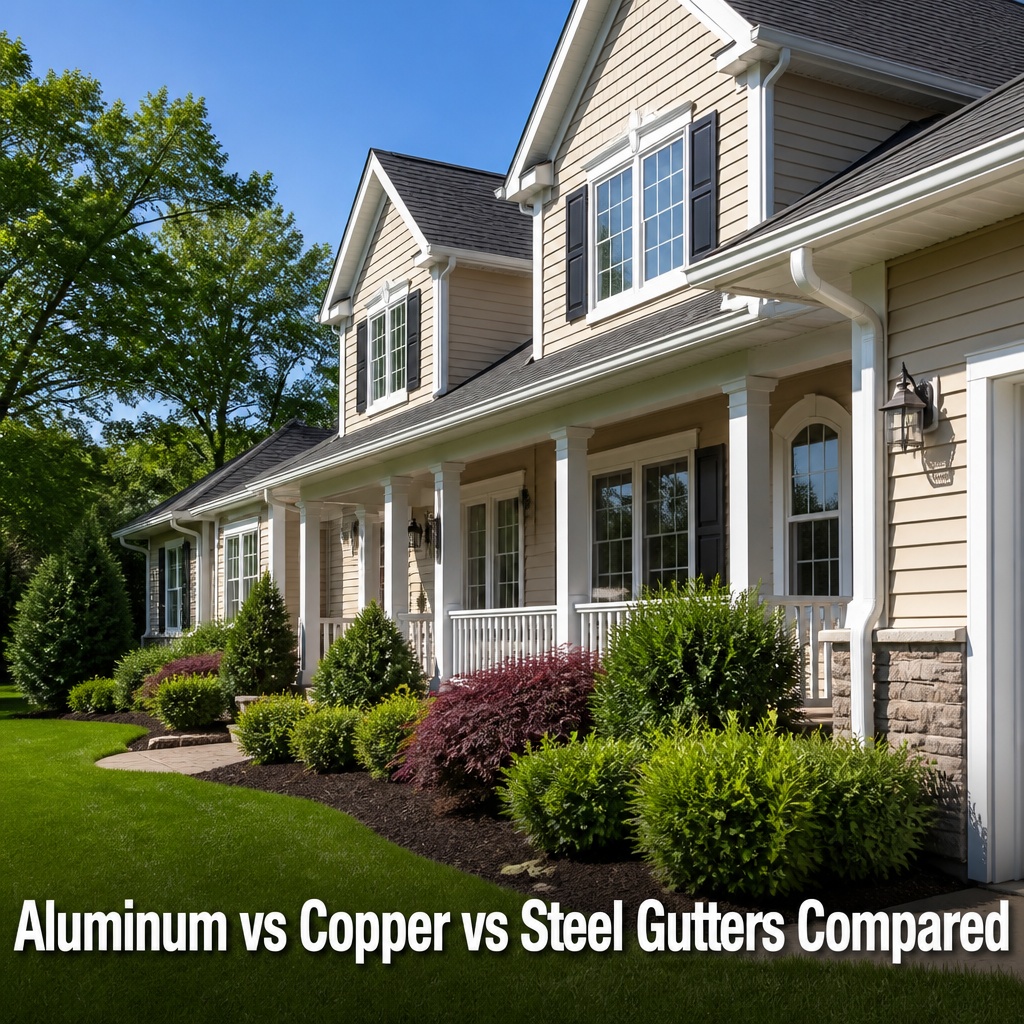
Choosing the right gutter material is one of those decisions that seems simple until you start comparing options side by side. Aluminum, copper, and steel each bring something different to the table — different price points, different lifespans, different maintenance demands, and very different aesthetics. Getting this choice wrong can mean premature replacement, ongoing repairs, or a gutter system that simply doesn’t hold up to your local climate.
Most homeowners default to aluminum because it’s what contractors recommend most often. But that doesn’t mean it’s always the right fit. If you’re building a high-end home, restoring a historic property, or dealing with extreme weather, copper or steel might serve you far better over the long run. Understanding the real differences between these three gutter materials helps you make a smarter investment from the start.
This guide breaks down each material honestly — covering durability, gutter cost, maintenance, lifespan, and curb appeal — so you can walk away with a clear picture of what works best for your specific situation. Before you commit to any material, it’s also worth understanding how gutter installation pricing breaks down per linear foot, since material choice directly affects your total project budget.
Material Overview and Core Differences
What Aluminum, Copper, and Steel Gutters Are Designed to Do
All gutters share the same core job: channel rainwater away from your roof, fascia board, foundation, and landscaping. Roof drainage done poorly leads to water intrusion, wood rot, and structural damage over time. The material you choose determines how well your gutter system handles that job across years and decades of exposure.
Aluminum gutters are the most widely installed option in residential construction. They’re lightweight, rust-resistant, and available in a wide range of gutter colors, making them a practical choice for most homes. Aluminum works well in moderate climates and handles standard rainfall without issue.
Copper gutters are a premium product designed for longevity and visual impact. They’re used on high-end homes, historic restorations, and architectural projects where appearance matters as much as function. Copper requires no painting and develops a natural patina over time that many homeowners find attractive.
Steel gutters — particularly galvanized steel — are built for strength. They’re heavier than aluminum and better suited to harsh weather environments where gutters face heavy snow loads, ice, or high winds. Steel is the go-to material when durability under physical stress is the top priority.
| Feature | Aluminum | Copper | Steel |
|---|---|---|---|
| Average Cost Per Linear Foot | $4–$9 | $25–$40 | $8–$15 |
| Typical Lifespan | 20–30 years | 50–100 years | 20–40 years |
| Rust Resistance | Excellent | Excellent | Moderate |
| Dent Resistance | Moderate | Moderate | High |
| Maintenance Level | Low | Very Low | Moderate |
| Seamless Compatibility | Yes | Yes | Limited |
How Each Material Differs in Weight, Strength, and Appearance
Gutter weight affects both installation complexity and long-term performance. Aluminum is the lightest of the three, which makes it easier to handle during installation and puts less stress on the fascia board. That’s a practical advantage for most standard residential projects.
Steel is significantly heavier, which adds strength but also increases the load on your home’s exterior. Galvanized steel gutters can weigh two to three times more than comparable aluminum sections, which means your fascia and mounting hardware need to be in solid condition before installation begins.
Copper sits somewhere in between on weight but stands apart completely on appearance. Fresh copper has a warm, reddish-brown tone that gradually shifts to a blue-green patina as it oxidizes. That natural aging process is considered a feature, not a flaw, and it’s a big reason why copper remains popular on upscale and historic homes.
Feature-by-Feature Comparison
Durability, Rust Resistance, and Dent Resistance
Gutter durability depends on how well a material holds up against moisture, physical impact, and temperature swings. Each of these three materials handles those stressors differently, and knowing the distinctions helps you match the right product to your environment.
Aluminum doesn’t rust, which gives it a significant advantage over steel in wet climates. However, aluminum is softer than steel, which means it dents more easily under impact from falling branches, hail, or ladders leaned against the gutter during cleaning. Thicker gauge aluminum — typically 0.032 inches or higher — reduces this risk considerably.
Copper shares aluminum’s rust resistance and actually performs better in coastal environments where salt air accelerates gutter corrosion on other materials. Copper is also prone to denting, though its natural patina helps conceal minor surface damage over time. The material itself doesn’t degrade from moisture exposure under normal conditions.
Steel gutters, especially galvanized steel, offer the best dent resistance of the three. The tradeoff is gutter corrosion risk. Even galvanized coatings eventually wear through, particularly at cut edges and joints, allowing rust to develop. In humid or coastal climates, steel requires more vigilance to maintain its protective coating and prevent early failure.
Maintenance, Installation, and Seamless System Compatibility
Gutter maintenance requirements vary significantly by material. Aluminum and copper both require minimal upkeep beyond regular cleaning to remove debris and prevent clogs. Steel demands more attention because any breach in its protective coating creates a rust entry point that spreads if left untreated.
Seamless gutters are formed on-site from a continuous roll of material, eliminating most of the joints where leaks typically develop. Aluminum is the most common material used in seamless gutter systems because it’s easy to form and widely available in seamless gutter machines. If you’re weighing your options between seamless and sectional systems, understanding the differences between seamless and sectional gutters is a useful starting point before choosing your material.
Copper can also be fabricated into seamless systems, though fewer contractors have the equipment and expertise to do it. Steel is less commonly available in seamless form, which means steel installations often involve more joints and, consequently, more potential leak points over time.
Gutter guards are compatible with all three materials, though installation methods vary. Adding gutter guards to any system reduces cleaning frequency and helps prevent debris buildup that leads to overflow and water damage.
Downspouts are typically matched to the gutter material for both aesthetic and practical reasons. Mixing materials — like copper gutters with aluminum downspouts — can cause galvanic corrosion at connection points, so it’s worth discussing material consistency with your gutter contractor before finalizing your system design.
Style, Patina, and Curb Appeal
The visual impact of your gutter choice matters more than most people expect. Gutters run along the full perimeter of your roofline, making them a visible part of your home exterior. The wrong material or color can look out of place, while the right choice enhances the overall appearance of the property.
Aluminum gutters come in a wide variety of gutter colors, typically available in painted finishes that can be matched to your trim, siding, or roofline. K-style gutters and half-round gutters are both available in aluminum, giving you flexibility in profile selection. The painted finish can fade or chip over time, but repainting is straightforward.
Copper gutters require no painting and change appearance naturally over time. The progression from bright copper to dark brown to blue-green patina is a defining characteristic of the material. This aging process is irreversible, so homeowners who prefer a consistent, uniform look may find copper’s evolution challenging to manage.
Steel gutters are available in painted finishes similar to aluminum, though the color selection may be more limited depending on the manufacturer. K-style and half-round profiles are available in steel, though half-round steel is less common. Steel’s heavier appearance can complement certain architectural styles, particularly on industrial or craftsman-style homes.
Pricing, Lifespan, and Long-Term Value
Upfront Cost Differences
Gutter cost varies dramatically across these three materials. Aluminum is consistently the most affordable option, with installed costs typically ranging from four to nine dollars per linear foot depending on gauge, profile, and regional labor rates. For a standard home requiring around two hundred linear feet of gutters, aluminum represents a relatively modest investment.
Steel gutters fall in the middle of the pricing range, generally running eight to fifteen dollars per linear foot installed. The higher cost reflects the material’s weight, the additional labor involved in handling heavier sections, and the more limited availability of seamless steel systems.
Copper gutters are in a category of their own on price. Installed costs typically start around twenty-five dollars per linear foot and can reach forty dollars or more for complex rooflines or custom fabrication. A full copper gutter installation on a mid-sized home can easily run five to ten times the cost of an equivalent aluminum system.
Expected Lifespan and Replacement Timing
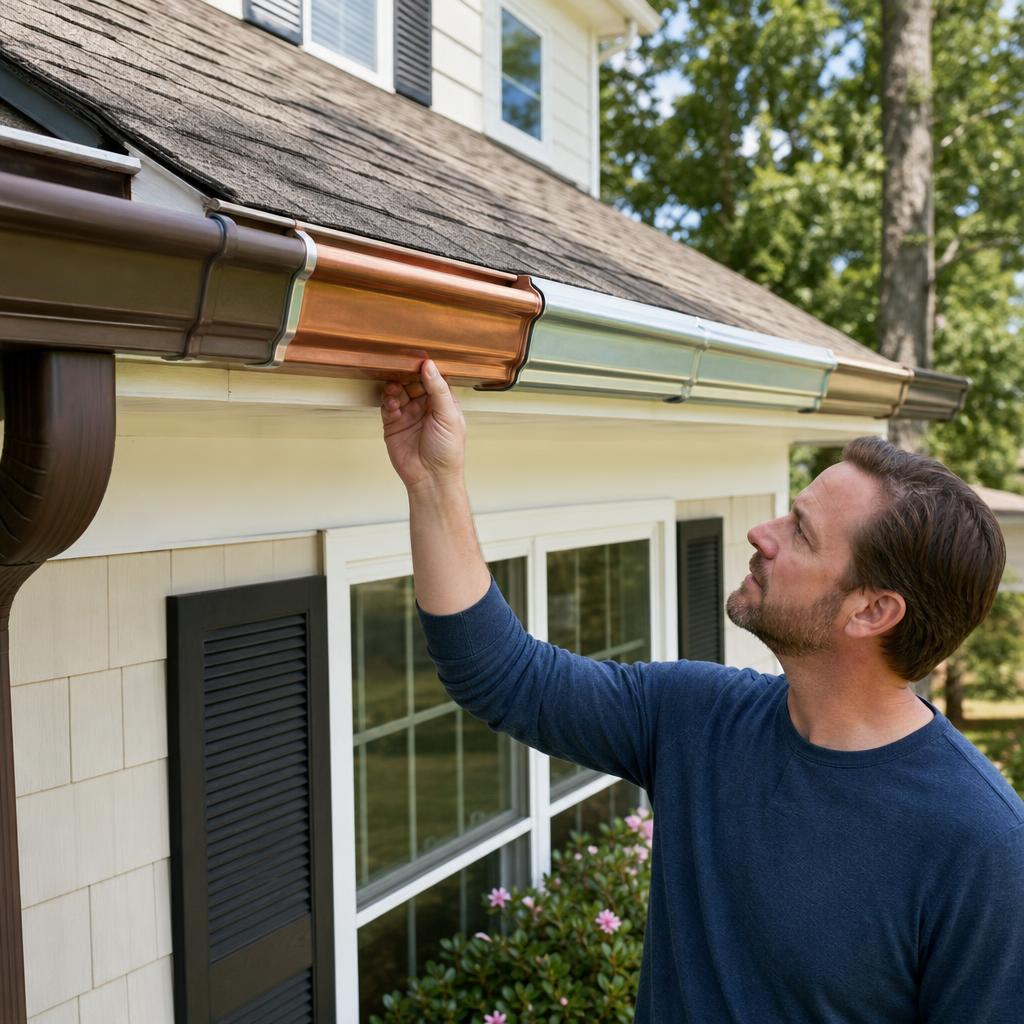
Gutter lifespan is where the cost comparison gets more nuanced. Aluminum gutters typically last twenty to thirty years with proper maintenance. That’s a solid run, but it does mean eventual gutter replacement is part of the ownership equation for most homeowners.
Steel gutters can last twenty to forty years depending on climate and maintenance. In dry climates with minimal humidity, galvanized steel performs exceptionally well. In wet or coastal environments, the lifespan shortens considerably without consistent upkeep to protect the coating from corrosion.
Copper gutters have the longest documented lifespan of any residential gutter material. Well-maintained copper systems routinely last fifty years, and installations on historic buildings have remained functional for a century or more. That extraordinary longevity fundamentally changes the long-term cost calculation for copper.
Value Tradeoffs Over Time
Calculating long-term value requires looking beyond the initial gutter cost. If aluminum gutters last twenty-five years and copper gutters last seventy-five years, a homeowner might replace aluminum three times before a copper system needs attention. Each replacement cycle includes both material and labor costs, which adds up significantly over decades.
Steel offers a middle-ground value proposition. It costs more upfront than aluminum but delivers better physical durability in demanding climates. For homeowners in regions with heavy snowfall, frequent ice storms, or high winds, the added strength of steel can prevent damage that would require premature gutter replacement.
The value of copper extends beyond pure function. Copper gutters are considered a premium feature that can increase perceived home value and appeal to buyers who appreciate quality craftsmanship. For homeowners planning to stay in their home long-term, copper’s combination of longevity and aesthetic appeal makes the higher upfront cost easier to justify.
Best Use Cases and Buying Recommendations
Which Gutter Material Fits Most Homes
For the majority of residential properties, aluminum is the practical choice. It handles rainwater management effectively, resists rust, comes in a wide range of gutter colors, and works seamlessly with modern gutter installation equipment. The lower upfront cost makes it accessible for most budgets, and its compatibility with seamless systems reduces long-term leak risk.
Aluminum is particularly well-suited to homes in moderate climates where extreme weather isn’t a regular concern. It’s also the easiest material to source, which means more gutter contractors can work with it and competitive pricing is easier to find. Before starting any installation project, taking time to measure your home accurately for new gutters ensures you get accurate material quotes and avoid costly miscalculations.
- Best for budget-conscious homeowners
- Ideal for moderate climates with standard rainfall
- Works well with seamless gutter systems
- Available in the widest range of gutter colors and profiles
- Compatible with most gutter guards on the market
When Copper Makes Sense
Copper is the right choice when longevity and appearance are the primary drivers. Historic home restorations often require copper to maintain architectural authenticity. High-end new construction projects use copper to signal quality and add lasting visual distinction to the home exterior.
Copper also makes sense for homeowners who want to install gutters once and never think about gutter replacement again. The fifty-plus year lifespan means copper can genuinely be a lifetime investment for many homeowners. When you factor in the cost of multiple aluminum replacement cycles, copper’s premium price becomes more defensible.
- Historic or architecturally significant homes
- High-end new construction projects
- Homeowners prioritizing longevity over upfront cost
- Coastal properties where salt air accelerates corrosion on other materials
- Properties where curb appeal and resale value are key priorities
When Steel Is the Better Choice
Steel gutters earn their place in climates where physical durability matters most. Heavy snow loads, ice dams, falling branches, and high winds can dent or deform aluminum gutters that would otherwise perform fine in milder conditions. Steel’s superior dent resistance makes it a smarter choice in these environments.
Working with a knowledgeable gutter installation contractor is especially important when choosing steel, since proper installation technique and coating maintenance are critical to preventing premature rust. Not all contractors have experience with steel systems, so vetting your installer carefully matters more with this material than with aluminum.
- Northern climates with heavy snow and ice
- Properties surrounded by mature trees with large branches
- Homes where physical impact from debris is a recurring concern
- Commercial or industrial properties requiring heavy-duty performance
- Homeowners willing to invest in regular maintenance to prevent corrosion
Conclusion
Aluminum, copper, and steel each solve the same problem in different ways. Aluminum offers the best balance of cost, availability, and performance for most homeowners. Copper delivers unmatched longevity and visual appeal for those willing to invest at a higher level. Steel provides physical toughness that neither aluminum nor copper can match in demanding climates.
The right choice depends on your budget, your climate, your home’s architectural style, and how long you plan to stay in the property. There’s no universally correct answer — only the answer that fits your specific situation. Take the time to get multiple quotes, ask your contractor about material options, and think beyond the upfront price to the full lifecycle cost of your gutter system.
FAQ
Which gutter material is the most affordable?
Aluminum is consistently the most affordable gutter material across both material and installation costs. It typically runs four to nine dollars per linear foot installed, making it the default choice for budget-conscious homeowners. Steel falls in the middle range, and copper is the most expensive option by a significant margin.
Which gutter material lasts the longest?
Copper gutters have the longest lifespan of any residential gutter material, routinely lasting fifty years or more with minimal maintenance. Well-maintained copper installations on historic buildings have remained functional for over a century. Aluminum and steel both offer solid lifespans in the twenty to forty year range, but neither approaches copper’s longevity under normal conditions.
Which gutter material is best for heavy rain or harsh weather?
For heavy rainfall, all three materials perform adequately when properly sized and installed. For harsh weather involving snow, ice, and physical impact, galvanized steel offers the best dent resistance and structural strength. In coastal environments with salt air exposure, copper and aluminum both outperform steel due to their superior resistance to gutter corrosion. Matching the material to your specific climate conditions is the most reliable way to ensure long-term performance.
Leave a Reply