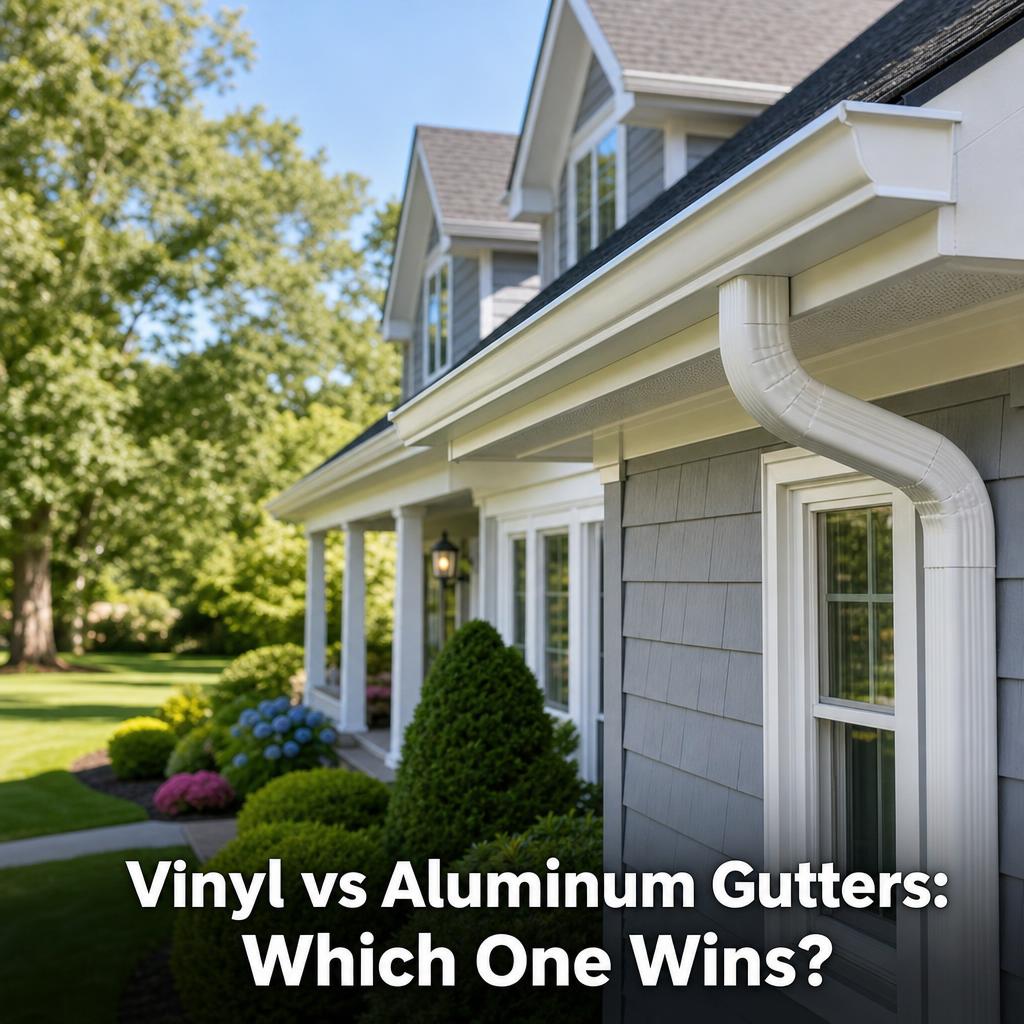
Choosing the right gutter material is one of those home improvement decisions that feels simple on the surface but gets complicated fast. You’ve got two popular options sitting at the top of most homeowners’ lists: vinyl gutters and aluminum gutters. Both move rainwater away from your home, protect your fascia board, and keep water damage at bay — but they do it differently, and the differences matter more than most people realize.
The gutter material you choose affects everything from your upfront gutter cost to how often you’ll be climbing a ladder for repairs. It affects how your home looks from the street, how well your gutters hold up through freeze-thaw cycles, and whether you’ll be replacing them in a decade or enjoying them for twenty-plus years. These aren’t small considerations.
This guide breaks down vinyl vs aluminum gutters across every category that matters — durability, gutter installation, maintenance, cost, and long-term value. By the end, you’ll know exactly which material fits your home, your climate, and your budget.
Vinyl vs Aluminum Gutters: Key Differences at a Glance
Material makeup, appearance, and installation style
Vinyl gutters are made from PVC plastic. They’re lightweight, come in pre-cut gutter sections, and snap together without the need for special tools. That makes them a popular pick for DIY installation projects. They typically come in white or a handful of basic colors, and they don’t require painting.
Aluminum gutters are made from thin sheets of metal, usually between 0.025 and 0.032 inches thick. They’re available as seamless gutters — formed on-site by a contractor using a roll-forming machine — or as sectional pieces. Aluminum can be painted to match virtually any home exterior, giving it a clear edge in curb appeal flexibility.
Here’s a quick side-by-side look at how these two gutter materials stack up at a basic level:
| Feature | Vinyl Gutters | Aluminum Gutters |
|---|---|---|
| Material | PVC plastic | Aluminum metal |
| Gutter Weight | Very light | Light to moderate |
| Seamless Option | No | Yes |
| DIY Friendly | Very easy | Moderate |
| Rust and Corrosion | None | Minimal (with coating) |
| Gutter Colors | Limited | Wide range |
| Typical Gutter Lifespan | 10–20 years | 20–30 years |
How each gutter type performs in everyday home use
In mild climates with moderate rainfall, vinyl gutters perform reliably. They handle rainwater flow well, resist rust and corrosion entirely, and stay low-maintenance for years. The problem shows up in extreme temperatures. Vinyl becomes brittle in very cold weather, which means it can crack under the weight of ice or snow — a real concern in northern climates.
Aluminum gutters handle temperature swings much better. They expand and contract without cracking, making them a stronger performer across a wider range of climate conditions. They’re also better suited to handle the weight of gutter guards and debris without warping or pulling away from the fascia board.
For everyday performance, aluminum edges ahead. It’s more adaptable, more structurally sound, and holds up better when conditions get tough.
Feature-by-Feature Comparison
Durability, lifespan, and resistance to weather
Gutter durability is where the gap between these two materials becomes most obvious. Vinyl gutters typically last between ten and twenty years, depending on climate and maintenance. In warmer, more stable climates, they can hit the upper end of that range. In areas with harsh winters, expect the lower end.
Aluminum gutters regularly last twenty to thirty years. Seamless aluminum gutters, in particular, tend to outlast sectional versions because they have fewer joints where leaks and weak points develop. The gutter material itself resists rust and corrosion well, especially when coated or painted properly.
Gutter weight also plays into durability. Aluminum is heavier than vinyl, which actually works in its favor — it holds its shape better under load, whether that’s standing water, debris, or ice. Vinyl’s lighter gutter weight makes it easier to handle during installation but more vulnerable to physical stress over time.
Leak potential, maintenance needs, and repairability
Leak potential is directly tied to how gutters are constructed. Sectional gutters — whether vinyl or aluminum — have joints every few feet. Those joints are sealed with caulk or connectors, and over time, they can fail. When they do, you get leaks that can damage your fascia board, siding, and foundation if left unchecked.
Seamless gutters eliminate most of those joints. Since seamless gutters are only available in aluminum (not vinyl), aluminum wins this category by default. If minimizing leak risk is a priority, seamless aluminum is the clear answer.
Maintenance needs are similar for both materials. You’ll need to clean gutters regularly, check downspouts for clogs, and inspect for damage after major storms. The difference is in repairability. Vinyl sections are easy to replace — you can buy matching pieces at most hardware stores. Aluminum repairs are also manageable, though matching paint color can sometimes be tricky.
If you’re planning a full gutter installation and want to understand what the process involves from start to finish, reading about what happens during a professional gutter installation can help you set realistic expectations before the crew arrives.
Color options, customization, and curb appeal
Vinyl gutters come in a limited palette — mostly white, brown, and a few neutral tones. You can’t paint vinyl effectively because paint doesn’t adhere well to PVC long-term. What you see at the store is essentially what you’re stuck with.
Aluminum gutters offer far more flexibility. They come pre-finished in dozens of gutter colors, and they can be painted to match your home’s trim or siding exactly. For homeowners who care about curb appeal or are trying to match a specific exterior color scheme, aluminum is the obvious choice.
Gutter size also matters for appearance and function. Both materials come in standard sizes — typically five-inch and six-inch profiles — but aluminum is more commonly available in custom gutter size configurations through contractors. This matters for larger roofs or homes with high rainfall volume.
Pricing and Long-Term Value
Upfront material and installation costs
Vinyl gutters are cheaper upfront. Material costs for vinyl typically run lower per linear foot than aluminum. For a DIY installation, that cost gap widens further because you’re not paying a contractor for labor. Vinyl gutter sections are sold at most home improvement stores, and the installation process requires minimal tools.
Aluminum gutters cost more per linear foot for materials, and if you’re going with seamless gutters, you’ll need a contractor with a roll-forming machine — which adds to the gutter installation cost. However, the price difference between vinyl and aluminum isn’t dramatic when you factor in sectional aluminum, which is also available for DIY projects.
Here’s a general breakdown of what you might expect to pay:
- Vinyl gutters (DIY): Lower material cost, minimal labor
- Vinyl gutters (contractor): Moderate total cost
- Aluminum sectional (DIY): Slightly higher material cost than vinyl
- Aluminum seamless (contractor): Higher upfront cost, but fewer future repairs
Replacement frequency and lifetime cost considerations
This is where the math shifts in aluminum’s favor. Vinyl gutters may need gutter replacement in ten to fifteen years, especially in harsh climates. Aluminum gutters, properly maintained, can last twice as long. When you calculate the cost of two vinyl installations versus one aluminum installation, the lifetime gutter cost often comes out similar — or lower for aluminum.
Gutter replacement also isn’t just about the gutters themselves. Every time you replace gutters, you’re paying for labor, disposal of old materials, and potential repairs to the fascia board or downspouts. Fewer replacements mean fewer of those hidden costs adding up over time.
Budget-friendly choice vs value-focused choice
If your budget is tight right now and you need gutters installed quickly and affordably, vinyl is a reasonable short-term solution. It protects your home from water damage, it’s easy to install, and it gets the job done without a major financial commitment.
If you’re thinking long-term — especially if you plan to stay in your home for many years — aluminum delivers better value. The higher upfront gutter cost pays off through longer gutter lifespan, fewer repairs, and better performance across a wider range of climate conditions.
The value-focused choice almost always points toward aluminum, particularly seamless aluminum installed by a qualified contractor. For guidance on finding the right professional, this resource on selecting a reliable gutter installation contractor walks through exactly what to look for before signing anything.
Unique Selling Points and Best Use Cases
When vinyl gutters make the most sense
Vinyl gutters aren’t the wrong choice — they’re just the right choice for specific situations. Here’s where they genuinely shine:
- Mild climates with minimal freeze-thaw cycles
- Budget-conscious homeowners who need a quick, affordable solution
- Rental properties where long-term investment isn’t the priority
- DIY enthusiasts who want a manageable weekend project
- Homes where gutter replacement is expected within the next decade anyway
In a warm, stable climate, vinyl gutters can perform well for many years without significant issues. The rust and corrosion resistance is a genuine advantage — vinyl will never oxidize, pit, or develop the kind of surface degradation that metal gutters can experience without proper coating.
When aluminum gutters are the better fit
Aluminum gutters are the better fit for most homeowners in most situations. They handle climate extremes better, last longer, offer more customization, and are available in seamless form — which dramatically reduces leak risk.
- Cold climates with heavy snow, ice, or freeze-thaw cycles
- Homes with complex rooflines that need custom gutter size configurations
- Homeowners focused on long-term value and minimal gutter replacement
- Properties where curb appeal and color matching matter
- Situations where a contractor is already being hired for the installation
Aluminum also pairs better with gutter guards. The structural integrity of aluminum means it can support the added weight of gutter guard systems without sagging or pulling away from the fascia board. Vinyl, being lighter and less rigid, can struggle under that additional load over time.
If you’re comparing aluminum to other metal options, it’s worth knowing how it stacks up against premium materials — a detailed look at how aluminum compares to copper and steel gutters can help you decide if upgrading further makes sense for your home.
Best choice for DIY projects, harsh climates, and long-term homeowners
For DIY installation, vinyl wins on ease. The gutter sections snap together, require no special tools, and are light enough to handle solo. If you’re comfortable on a ladder and want to tackle gutter installation yourself, vinyl is the more forgiving material to work with.
For harsh climates, aluminum is the clear winner. Cold temperatures cause vinyl to become brittle and crack. Heavy snow loads can cause vinyl gutter sections to sag or separate at the joints. Aluminum handles these conditions without the same level of structural risk.
For long-term homeowners, aluminum is the smarter investment. The longer gutter lifespan, better performance, and lower lifetime gutter cost make it the material that rewards patience and planning. If you’re going to be in your home for the long haul, spending a bit more upfront on aluminum — especially seamless aluminum — is a decision most homeowners don’t regret.
Before starting any installation, it also helps to know your measurements. Getting accurate numbers for your roofline ensures you order the right amount of material and avoid costly waste. A practical guide on measuring your home for new gutters makes that process straightforward, even for first-timers.
Conclusion
Both vinyl and aluminum gutters do the fundamental job of moving rainwater away from your home and protecting it from water damage. The question isn’t whether one works and the other doesn’t — it’s which one works better for your specific situation.
Vinyl gutters offer an affordable, DIY-friendly entry point that works well in mild climates and lower-stakes applications. Aluminum gutters offer superior durability, better climate resistance, more color options, and the seamless construction that reduces leak risk over the long term.
For most homeowners, aluminum is the stronger choice. It costs more upfront but delivers better performance, longer gutter lifespan, and fewer headaches over time. If budget is the primary concern right now, vinyl is a workable solution — just go in knowing you’ll likely be replacing it sooner.
The right gutter material is the one that fits your home, your climate, and your long-term plans. Use this comparison to make that call with confidence.
FAQ
Are vinyl gutters cheaper than aluminum gutters?
Yes, vinyl gutters are generally cheaper upfront. The gutter cost per linear foot is lower for vinyl, and DIY installation is easier, which eliminates labor costs entirely. However, when you factor in gutter replacement frequency and lifetime costs, aluminum often comes out ahead financially over the long run.
Which gutter material lasts longer?
Aluminum gutters last longer. A typical aluminum gutter lifespan runs twenty to thirty years, while vinyl gutters typically last ten to twenty years. In harsh climates, vinyl’s lifespan can be significantly shorter due to cracking and brittleness caused by cold temperatures. Seamless aluminum gutters tend to last the longest of all common gutter options.
Which is better for DIY installation?
Vinyl gutters are better for DIY installation. The gutter sections are lightweight, easy to cut, and snap together without specialized tools. Aluminum sectional gutters can also be installed by a confident DIYer, but seamless aluminum gutters require a contractor with a roll-forming machine. If you’re planning a DIY project, vinyl is the more accessible starting point.
Leave a Reply