Blog

  • How Long Do Seamless Gutters Last? Facts You Need

    How Long Do Seamless Gutters Last? Facts You Need

    Seamless gutters are one of the smartest investments you can make for your home’s exterior. They protect your foundation, siding, and landscaping by channeling water away efficiently — and because they’re custom-cut to fit your roofline without joints, they’re far less prone to leaking than traditional sectional systems. But like any part of your home, they don’t last forever.

    Most homeowners want to know exactly what they’re getting before spending money on a new gutter system. That’s a fair question, and the answer depends on several factors — the material you choose, how well the gutters are installed, and how consistently you maintain them. Understanding these variables helps you plan smarter and avoid costly surprises down the road.

    This guide breaks down everything you need to know about seamless gutter lifespan — from material comparisons to warning signs that replacement is overdue. If you’re also weighing your options between gutter types, the detailed breakdown in this comparison of seamless vs sectional gutters is worth reading before you commit to anything.

    What Affects Seamless Gutter Lifespan

    Gutter lifespan isn’t a fixed number. It’s shaped by a combination of material quality, installation workmanship, and the environment your gutters operate in every single day. Getting any one of these wrong can cut years off an otherwise solid system.

    Material Differences

    The material your seamless gutters are made from is the single biggest factor in how long they’ll last. Different gutter materials age at very different rates, and each comes with its own set of trade-offs between cost, durability, and maintenance needs.

    Here’s a quick comparison of the most common seamless gutter materials:

    Material Typical Lifespan Rust Risk Cost Level
    Aluminum 20–30 years Low Moderate
    Steel 20–30 years Moderate Moderate–High
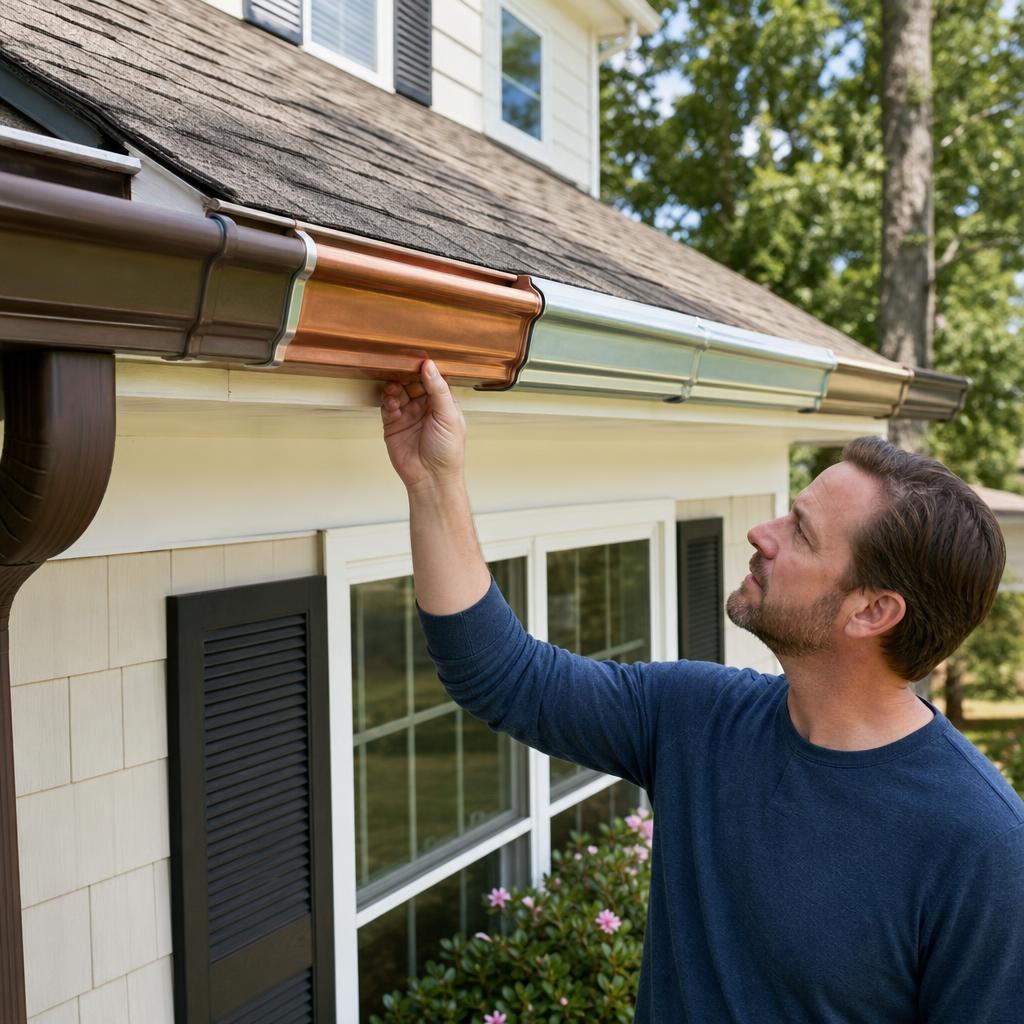
    Copper 50+ years None High
    Zinc 40–50 years None High
    Vinyl 10–20 years None Low

    Aluminum gutters dominate the market because they strike a solid balance between affordability and durability. Vinyl gutters are the cheapest option but tend to crack in cold climates and fade quickly under UV exposure. Copper and zinc gutters are premium choices that can outlast the roof itself.

    Installation Quality and Roof Design

    Even the best gutter material will fail early if it’s installed poorly. Improper pitch, inadequate hanger spacing, and wrong downspout placement all create stress points that shorten gutter lifespan significantly.

    Professional gutter installation matters more than most homeowners realize. Gutters need to slope correctly toward downspouts — typically about a quarter inch for every ten feet — so water doesn’t pool and add unnecessary weight. Poor slope leads to standing water, which accelerates rust and corrosion and puts strain on the fascia board.

    Your roof design also plays a role. Steep roofs shed water faster and with more force, which can stress gutters at the connection points. Complex rooflines with multiple valleys and angles require more precise installation to ensure proper roof drainage throughout the system.

    Climate, Debris, and Maintenance

    Where you live has a direct impact on how long your seamless gutters hold up. Homes in areas with heavy snowfall deal with ice dams and freeze-thaw cycles that expand and contract metal over time. Coastal properties face salt air, which accelerates rust and corrosion even on aluminum.

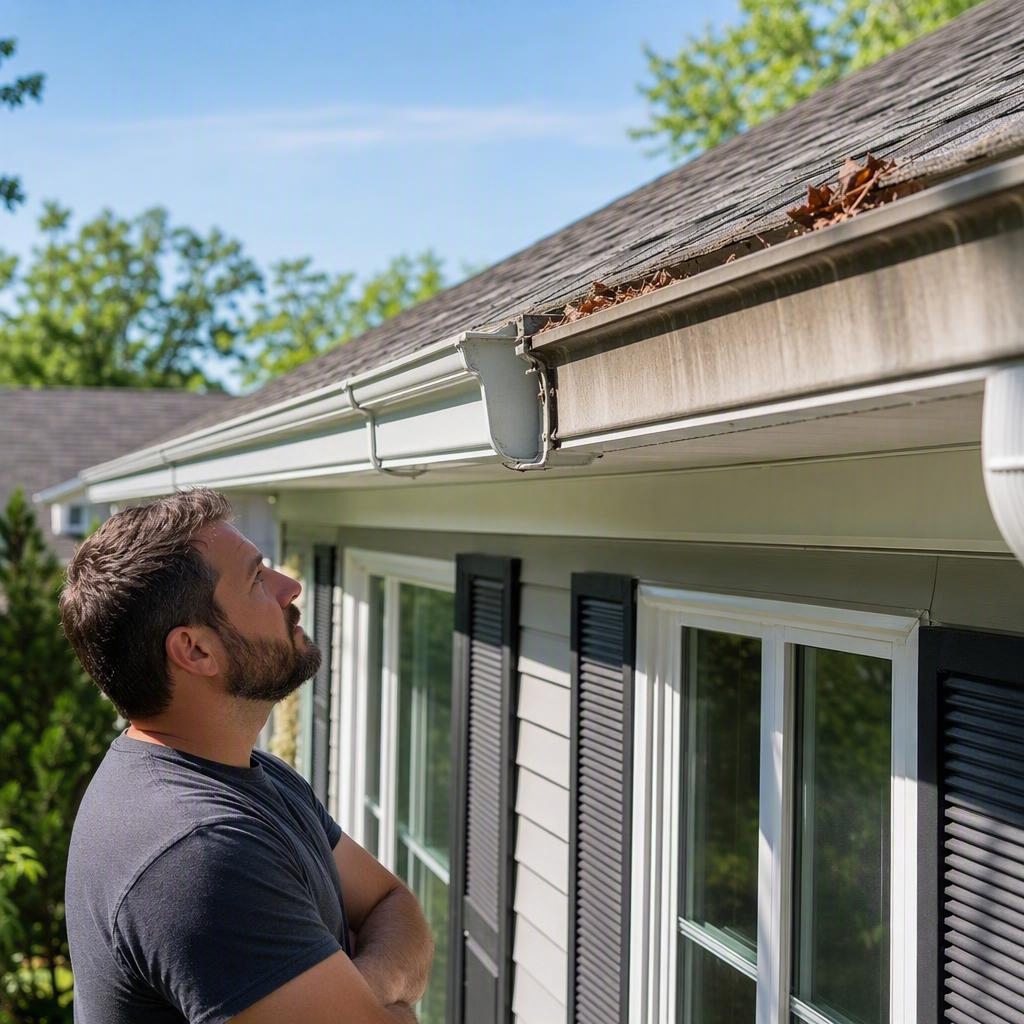
    Debris accumulation is one of the most underestimated threats to gutter lifespan. Leaves, twigs, and organic matter trap moisture against the gutter surface, which breaks down coatings and leads to premature deterioration. Homes surrounded by trees face this challenge more intensely than those in open areas.

    Consistent maintenance — cleaning, inspecting, and addressing small issues early — can add years to your system’s life. Neglect, on the other hand, turns minor problems into expensive gutter replacement projects.

    How Long Seamless Gutters Typically Last

    The lifespan of seamless gutters varies by material, but across the board, they outlast sectional systems by a meaningful margin. Fewer seams mean fewer failure points, and that translates directly into longer service life.

    Common Lifespan Range for Aluminum

    Aluminum is the most popular seamless gutter material, and for good reason. It’s lightweight, rust-resistant, and holds paint well. Under normal conditions with regular maintenance, aluminum seamless gutters typically last between twenty and thirty years.

    That range can shift depending on your climate and how well the gutters are cared for. In mild climates with moderate rainfall, aluminum gutters often reach the upper end of that range. In harsher environments — heavy snow, extreme heat, or coastal salt air — they may show wear closer to the lower end.

    Gauge thickness also matters. Thicker aluminum holds up better under physical stress from ladders, falling branches, and heavy snow loads. Standard residential aluminum gutters are typically available in two common thicknesses, and choosing the heavier option adds durability without dramatically increasing cost.

    Longer-Lasting Options Like Copper and Steel

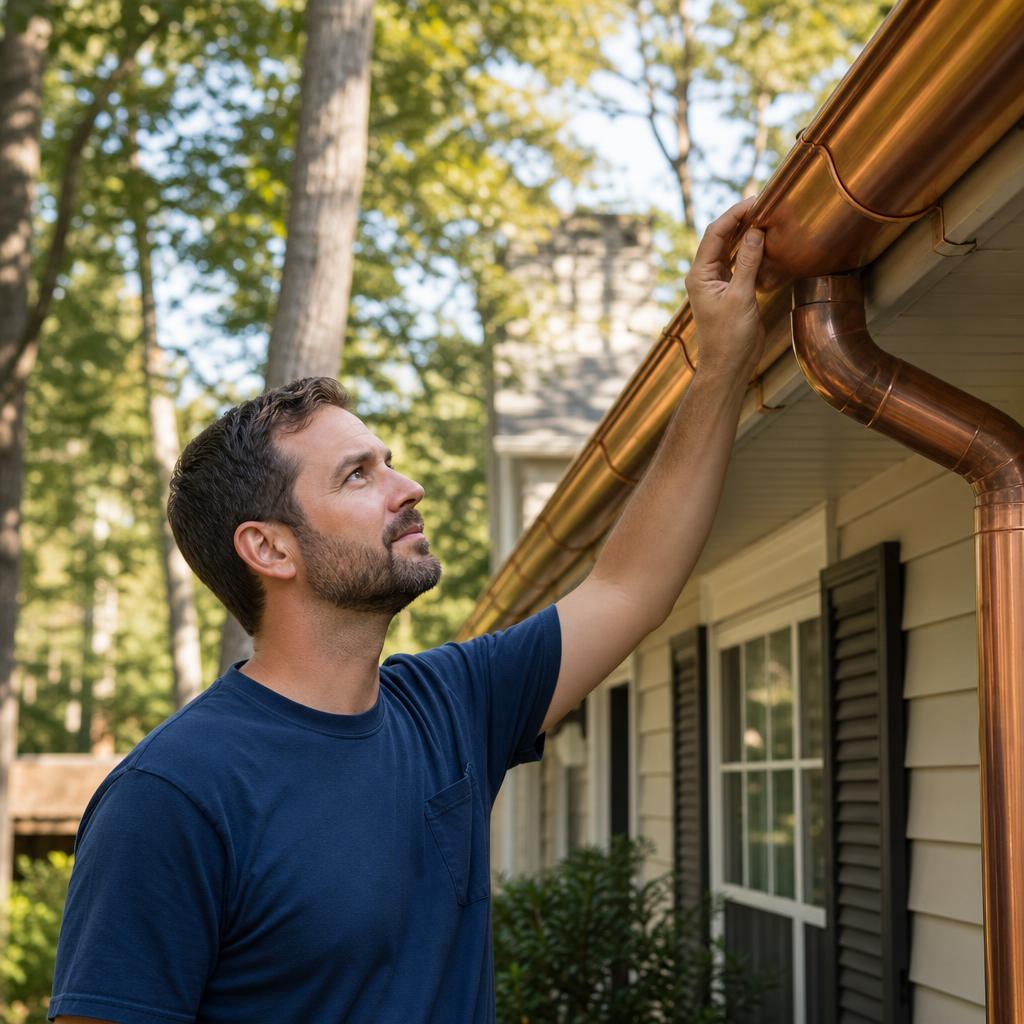
    If you want gutters that outlast nearly everything else on your home’s exterior, copper and zinc are the top choices. Copper seamless gutters are legendary for their longevity — properly installed copper gutters can last well over fifty years with minimal maintenance. They develop a natural patina over time that actually protects the metal rather than degrading it.

    Zinc gutters offer similar longevity and self-healing properties. Like copper, zinc forms a protective layer when exposed to the elements, which means minor scratches and surface damage repair themselves naturally. For homeowners who want a long-term solution and don’t mind the higher upfront cost, understanding which gutter material lasts the longest can help clarify whether the investment makes sense for your situation.

    Steel gutters fall in the middle ground. They’re stronger than aluminum and handle physical impact better, but they’re more susceptible to rust if the coating is damaged. Galvanized steel gutters can last twenty to thirty years, while stainless steel options push that further with better corrosion resistance.

    How Seamless Compares to Sectional Gutters

    Sectional gutters are assembled from pre-cut pieces joined together with connectors and sealant. Every joint is a potential leak point, and over time, those seams fail — especially as sealant ages and metal expands and contracts with temperature changes.

    Seamless gutters eliminate most of those joints. The only seams are at corners and downspout connections, which dramatically reduces the number of places where leaks can develop. This structural advantage is the primary reason seamless systems consistently outlast sectional ones by five to ten years or more.

    The installation process is also more precise with seamless gutters. They’re custom-fabricated on-site to fit your exact roofline, which means better fit, better water flow, and less stress on the system overall.

    Featured image

    Signs Your Seamless Gutters Are Near the End

    Knowing when to repair versus replace is one of the most practical skills a homeowner can develop. Seamless gutters give clear warning signs before they fail completely — if you know what to look for.

    Leaks, Sagging, and Pulling Away

    Leaks in seamless gutters usually appear at the corners or downspout connections — the only places where seams exist. A single small leak can often be repaired with fresh sealant. But if you’re seeing multiple leaks or water dripping from the middle of a gutter run, the material itself may be compromised.

    Sagging gutters are a serious warning sign. They indicate that hangers have failed, the fascia board behind them has rotted, or the gutters are holding too much weight from debris and standing water. Sagging disrupts proper drainage and puts stress on the entire system.

    Gutters pulling away from the roofline entirely suggest that the underlying fascia board has deteriorated to the point where it can no longer hold fasteners. At that stage, gutter replacement — along with fascia repair — is usually unavoidable.

    Rust, Corrosion, and Cracks

    Surface rust on steel gutters is manageable if caught early. Once rust penetrates through the metal, though, the structural integrity is gone and replacement is the only real fix. Aluminum gutters don’t rust, but they can develop oxidation and pitting over time, especially in coastal environments.

    Cracks are most common in vinyl gutters exposed to repeated freeze-thaw cycles. Even small cracks allow water to escape, which can damage siding, windows, and the foundation over time. Water damage from failing gutters is often far more expensive than the cost of gutter replacement itself.

    Corrosion around downspout connections or at low points in the gutter run signals that water has been sitting in those areas for extended periods. That’s both a symptom and a cause of accelerated deterioration.

    Overflow and Drainage Problems

    Gutters that overflow during moderate rain aren’t necessarily clogged — they may be undersized, improperly pitched, or have inadequate downspouts for the volume of water your roof sheds. Persistent overflow causes water to pool near your foundation, which is exactly what gutters are designed to prevent.

    If cleaning doesn’t solve the overflow problem, the issue is likely with the system design rather than maintenance. Downspouts that are too few or too small for your roof’s square footage create bottlenecks that no amount of cleaning will fix.

    Drainage problems that persist after cleaning and minor repairs are a strong signal that the system has reached the end of its useful life and needs professional evaluation.

    How to Make Seamless Gutters Last Longer

    The good news is that most of the factors that shorten gutter lifespan are within your control. Consistent habits and a few smart upgrades can add years — sometimes decades — to your system.

    Cleaning and Inspection Habits

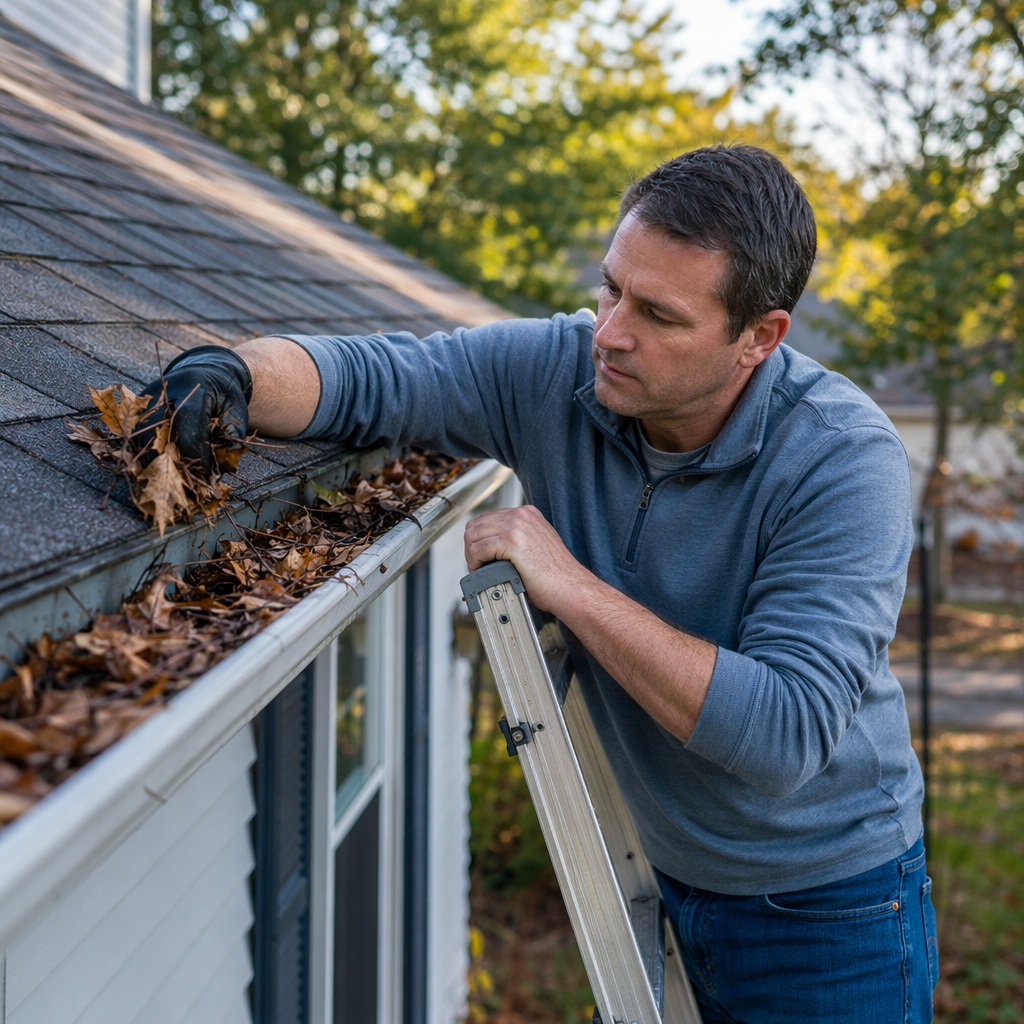
    Gutter cleaning is the single most impactful maintenance task you can perform. Removing leaves, debris, and sediment prevents moisture buildup, reduces weight load, and keeps water flowing freely through downspouts. Most homes benefit from cleaning at least twice per year — once in late spring and once in late fall after leaves have dropped.

    Gutter inspection should happen at the same time. Look for loose hangers, separated joints, rust spots, and any areas where water appears to be pooling. Catching small problems early keeps repair costs low and extends the life of the entire system.

    After major storms, a quick visual check from the ground can reveal obvious issues like sagging sections or debris blockages that need immediate attention.

    Gutter Guards and Tree Trimming

    Gutter guards reduce how often debris enters the system, which means less frequent cleaning and less moisture-related damage over time. They’re not a maintenance-free solution — some debris still accumulates on top of guards and requires occasional removal — but they significantly reduce the workload and protect the gutter interior.

    Tree trimming is equally important. Overhanging branches drop leaves, seeds, and twigs directly into gutters and can cause physical damage during storms. Keeping branches trimmed back from your roofline reduces debris volume and lowers the risk of impact damage.

    Both strategies work best together. Guards handle the fine debris that slips through, while trimming reduces the overall volume entering the system in the first place.

    Repairs, Re-Sealing, and Proper Drainage

    Small repairs done promptly prevent big problems later. Re-sealing corner joints and downspout connections every few years keeps those vulnerable points watertight. Tightening loose hangers before they fail prevents sagging and the fascia damage that follows.

    Proper drainage around your home’s foundation supports the entire gutter system. Downspout extensions that direct water at least four to six feet away from the foundation prevent backflow and soil erosion near the structure. Splash blocks and underground drainage options are worth considering for homes with persistent pooling issues.

    If you’re planning a full gutter replacement or new installation, working with a qualified contractor makes a significant difference in long-term performance. Knowing the right way to choose a gutter installation contractor helps ensure the job is done correctly from the start, which is the foundation of a long-lasting system.

    Conclusion

    Seamless gutters are a durable, low-maintenance solution that outperforms sectional systems in almost every measurable way. With the right material, proper installation, and consistent upkeep, they can protect your home for decades without major issues. Aluminum is the practical choice for most homeowners, while copper and zinc offer exceptional longevity for those willing to invest more upfront. Pay attention to the warning signs, stay on top of cleaning, and address repairs early — those habits alone can add years to your system’s life.

    FAQ

    Do seamless gutters last longer than sectional gutters?

    Yes. Seamless gutters typically outlast sectional gutters by five to ten years or more. The absence of joints along the gutter run eliminates the most common failure points — seam separation and leaking — which are the primary reasons sectional systems deteriorate faster. Seamless gutters are also custom-fit to your roofline, which improves water flow and reduces stress on the system.

    Which seamless gutter material lasts the longest?

    Copper and zinc gutters have the longest lifespan of any seamless gutter material, often exceeding fifty years with proper care. Both metals develop a natural protective layer over time that resists corrosion without painting or coating. Aluminum is the most popular choice for its balance of durability and cost, typically lasting twenty to thirty years under normal conditions.

    How often should seamless gutters be cleaned?

    Most homes need gutter cleaning at least twice per year. Homes surrounded by trees or in areas with heavy seasonal debris may need cleaning three to four times annually. Regular cleaning prevents blockages, reduces moisture damage, and keeps downspouts flowing freely — all of which directly extend the life of your seamless gutter system.

  • Copper Gutters Pros and Cons: Worth the Cost?

    Copper Gutters Pros and Cons: Worth the Cost?

    Copper gutters are one of those home improvement choices that immediately signal quality. They catch the eye, hold up against the elements, and carry a reputation that most gutter materials simply cannot match. But they also come with a price tag that stops many homeowners in their tracks.

    The decision to invest in copper gutters is not just about aesthetics. It involves weighing long-term gutter durability against upfront gutter cost, understanding installation complexity, and deciding whether the return on investment makes sense for your specific property. This guide breaks all of that down clearly.

    If you have been comparing gutter materials and wondering whether copper is genuinely worth the premium, you are in the right place. This article covers everything from material characteristics and performance metrics to real drawbacks and a final verdict grounded in practical criteria.

    What Copper Gutters Are and Why They Stand Out

    Copper gutters occupy a unique position in the world of rainwater management. They are not a mass-market product. They are a premium choice with a distinct look, exceptional longevity, and a set of characteristics that separate them from aluminum gutters, steel gutters, vinyl gutters, and zinc gutters.

    Core product features and material characteristics

    Copper is a naturally occurring metal with outstanding corrosion resistance. Unlike steel gutters that can rust or vinyl gutters that can crack under UV exposure, copper develops a protective oxide layer over time. This layer, known as patina, actually strengthens the material rather than degrading it.

    Copper gutters are available in both seamless and sectional formats. Seamless gutters made from copper are fabricated on-site to fit your roofline precisely, reducing the number of joints where leaks can develop. The material is also fully recyclable, which appeals to environmentally conscious homeowners.

    Copper is one of the few gutter materials that genuinely improves with age, both structurally and visually. The patina transition from bright orange to deep brown to classic green is a natural process that many homeowners find highly desirable, particularly on historic homes and high-end properties.

    Here is a quick comparison of copper against other common gutter materials:

    Material Average Lifespan Corrosion Resistance Relative Cost Maintenance Level
    Copper 50 to 100 years Excellent Very High Low
    Aluminum 20 to 30 years Good Low Low to Medium
    Steel 20 to 25 years Moderate Medium Medium
    Vinyl 10 to 20 years Poor Very Low Low
    Zinc 40 to 80 years Very Good High Low

    Who copper gutters are best suited for

    Copper gutters are not the right fit for every home or every budget. They perform best in specific contexts where their premium qualities are fully appreciated and utilized.

    • Owners of historic homes seeking period-accurate materials
    • Homeowners prioritizing curb appeal and long-term property value
    • Properties in coastal or high-humidity environments where corrosion resistance matters most
    • Buyers who plan to stay in their home long enough to recoup the investment
    • Architects and builders working on luxury or custom residential projects

    If you are planning a gutter replacement on a standard suburban home and budget is a primary concern, copper may not be the most practical choice. However, for the right property and the right owner, the value proposition is genuinely compelling.

    Pros and Cons of Copper Gutters

    Every premium product has trade-offs. Copper gutters deliver exceptional performance in several areas while presenting real challenges in others. Understanding both sides clearly helps you make a confident decision.

    Key benefits: durability, aesthetics, longevity, and low maintenance

    The gutter lifespan of copper is unmatched among common gutter materials. A properly installed copper gutter system can last between 50 and 100 years with minimal intervention. That kind of longevity dramatically changes the cost-per-year calculation compared to aluminum gutters or vinyl gutters that need replacement every two decades.

    Gutter maintenance requirements for copper are genuinely low. Routine gutter cleaning to remove debris is still necessary, but copper does not require painting, sealing, or rust treatment. The patina that forms naturally acts as a self-protecting barrier against the elements.

    From an aesthetic standpoint, copper gutters are simply in a class of their own. They add a level of architectural refinement that no other gutter material replicates. For historic homes or high-end custom builds, this visual impact directly supports curb appeal and resale value.

    • Exceptional gutter durability with a lifespan of up to a century
    • Natural corrosion resistance without chemical treatments
    • Distinctive patina that enhances appearance over time
    • Low long-term maintenance compared to most gutter materials
    • Strong return on investment for high-value properties
    • Fully recyclable and environmentally sustainable
    • Compatible with gutter guards for even lower upkeep

    Main drawbacks: cost, installation complexity, theft risk, and patina changes

    The most significant barrier is gutter cost. Copper gutters can cost three to five times more than aluminum gutters per linear foot, and that gap widens further when you factor in specialized gutter installation labor. For a full home installation, the total investment can reach several thousand dollars more than standard options.

    Gutter installation with copper requires skilled professionals who understand soldering and copper-specific joining techniques. Not every contractor has this expertise, which limits your options and can drive up labor costs further. If you are researching what to expect from a contractor, reviewing how to select a qualified gutter installation professional is a smart first step before requesting quotes.

    Featured image

    Theft is a real concern that many homeowners overlook. Copper has significant scrap metal value, making copper gutters a target in some areas. This is not a dealbreaker, but it is a practical risk worth acknowledging.

    • Very high upfront gutter cost compared to other materials
    • Requires specialized installation skills including soldering
    • Patina changes may not appeal to all homeowners or neighborhoods
    • Scrap metal value makes copper gutters a theft target
    • Incompatible with certain metals, which can cause galvanic corrosion
    • Limited contractor availability in some regions

    Performance, Installation, and User Experience

    Understanding how copper gutters actually perform over time, and what the installation process involves, gives you a realistic picture of what ownership looks like day to day.

    Performance metrics: lifespan, corrosion resistance, weather resistance, and upkeep

    Copper’s performance record across decades of real-world use is exceptional. Its natural corrosion resistance means it handles rain, snow, ice, and humidity without degrading the way steel gutters or vinyl gutters do. Roof drainage systems made from copper maintain their structural integrity through freeze-thaw cycles that crack or warp lesser materials.

    The patina process is worth understanding in detail. Initially, copper gutters appear as a bright, shiny orange-brown. Over time, exposure to oxygen and moisture causes the surface to darken. Eventually, the classic blue-green verdigris patina forms. This is not damage. It is a natural chemical process that actually seals the surface and extends gutter lifespan.

    Downspouts made from copper perform equally well, maintaining flow capacity and resisting blockages caused by corrosion buildup. When paired with quality gutter guards, a copper system can go years between cleanings. For homeowners comparing material longevity across options, this breakdown of which gutter material lasts the longest provides useful context for the full picture.

    Installation requirements, compatibility, and common user concerns

    Copper gutter installation is not a DIY-friendly project for most homeowners. The material requires precise cutting, careful handling to avoid denting, and soldering at joints to create watertight seals. This is skilled trade work, and cutting corners leads to leaks and premature failure.

    Compatibility is a genuine technical concern. Copper reacts with certain metals through a process called galvanic corrosion. Specifically, copper should not come into direct contact with aluminum or steel fasteners and components. Installers must use copper or stainless steel hardware throughout the system to avoid this issue.

    Sizing also matters significantly for roof drainage performance. Choosing between gutter profiles and dimensions affects how well your system handles heavy rainfall. If you are unsure about sizing, reviewing the differences between 5-inch and 6-inch gutter options can help clarify what your roofline actually needs before installation begins.

    Common user concerns include the patina timeline, which varies by climate, and the visibility of solder joints on seamless sections. Most experienced installers minimize visible joints, but homeowners should discuss this during the planning phase.

    Rating Criteria and Final Verdict

    Scoring copper gutters fairly requires looking at them through multiple lenses. A product that scores poorly on cost can still deliver outstanding overall value if its other attributes are strong enough.

    How to score copper gutters: value, durability, appearance, maintenance, and installation

    • Value: High upfront gutter cost, but exceptional long-term return on investment for the right property. Score: 7 out of 10
    • Durability: Best-in-class gutter durability with a lifespan that outlasts virtually all competing gutter materials. Score: 10 out of 10
    • Appearance: Unmatched curb appeal with a natural patina that improves over time. Score: 10 out of 10
    • Maintenance: Minimal upkeep required beyond standard gutter cleaning. Score: 9 out of 10
    • Installation: Complex process requiring specialized skills and careful material compatibility management. Score: 6 out of 10

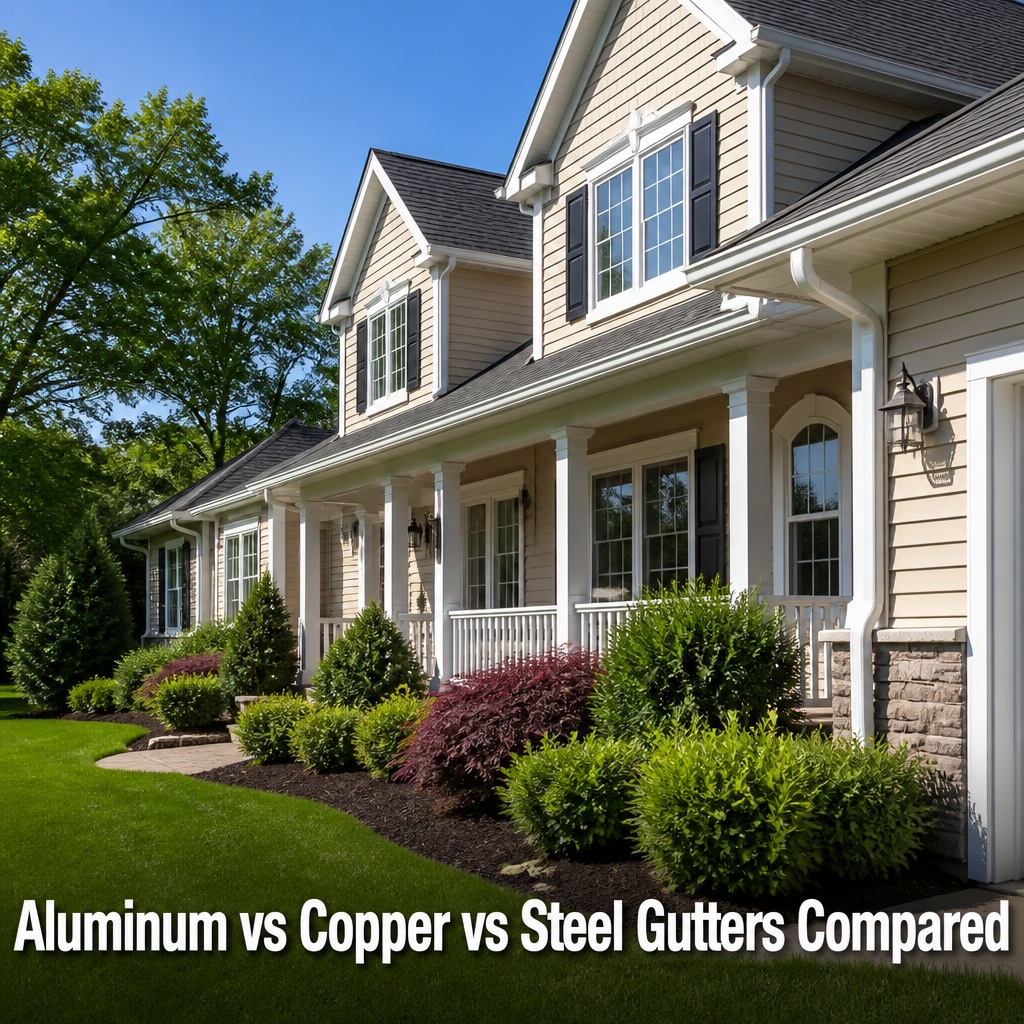
    When comparing copper against aluminum gutters or zinc gutters on a pure cost basis, copper loses ground quickly. But when the comparison shifts to total ownership cost over several decades, the math changes considerably. A system that lasts 80 years without replacement or repainting delivers real financial value, even at a premium starting price. For a detailed look at how these materials stack up, this comparison of aluminum, copper, and steel gutters covers the key differences in depth.

    Final verdict on whether copper gutters are worth it

    Copper gutters are worth the cost under specific conditions. If you own a high-value property, a historic home, or a custom build where aesthetics and longevity are priorities, copper delivers a level of performance and visual impact that no other gutter material matches.

    For the average homeowner replacing gutters on a modest property with a tight budget, the upfront gutter cost is difficult to justify. Aluminum gutters offer solid performance at a fraction of the price, and for many homes, that is the smarter financial decision.

    The honest answer is that copper gutters are a premium product that rewards the right buyer. They are not overpriced for what they deliver. They are simply priced for a specific market. If your home and your plans align with what copper offers, the investment is absolutely justified.

    FAQ

    How long do copper gutters typically last?

    Copper gutters have a gutter lifespan of 50 to 100 years under normal conditions. With proper installation and routine gutter cleaning, many copper systems outlast the homes they are installed on. This exceptional longevity is one of the primary reasons homeowners choose copper despite the higher gutter cost.

    Are copper gutters worth the higher price?

    For the right property, yes. The combination of gutter durability, corrosion resistance, low maintenance, and curb appeal creates a strong return on investment over time. Homeowners who plan to stay in their home long-term and value aesthetics will find copper gutters deliver genuine value that cheaper gutter materials cannot replicate.

    Do copper gutters require special maintenance?

    Copper gutters do not require painting, sealing, or rust treatment. Standard gutter maintenance involves periodic gutter cleaning to remove leaves and debris, which applies to all gutter materials. Installing gutter guards can reduce cleaning frequency further. The patina that develops naturally requires no intervention and actually protects the metal surface over time.

  • What Gutter Material Lasts the Longest?

    What Gutter Material Lasts the Longest?

    Gutters are one of those home features most people ignore until something goes wrong. A failed gutter system can lead to serious water damage, foundation erosion, and rotted fascia boards — all of which cost far more to fix than a quality gutter installation would have. Choosing the right material from the start is one of the smartest decisions a homeowner can make.

    The gutter material you choose directly determines how long your system will last, how much maintenance it needs, and what it will cost you over time. Some materials hold up for decades with minimal care. Others start showing wear within a few years, especially in harsh climates. Understanding the differences helps you avoid costly gutter replacement down the road.

    This guide breaks down every major gutter material by durability, cost, and real-world performance. If you want a system that lasts and protects your home effectively, the information here will help you make a confident, informed choice.

    What Gutter Material Lasts the Longest?

    How gutter lifespan is measured

    Gutter lifespan is measured by how long a material maintains structural integrity and functional performance under normal weather exposure. That includes resistance to corrosion, physical warping, cracking, and joint failure. A gutter that looks fine but leaks at every seam has effectively failed, regardless of how long it has been installed.

    Gutter durability depends on material composition, coating quality, and how well the system handles thermal expansion. Metals that expand and contract significantly with temperature changes tend to develop cracks or loose joints over time. Materials with natural corrosion resistance hold up far better in wet or coastal environments.

    The table below gives a quick overview of average gutter lifespan by material under typical conditions.

    Material Average Lifespan Corrosion Resistance Relative Cost
    Copper 50+ years Excellent Very High
    Zinc 40–50 years Excellent High
    Stainless Steel 30–50 years Very Good High
    Aluminum 20–30 years Good Moderate
    Galvanized Steel 15–20 years Moderate Moderate
    Vinyl 10–20 years Poor Low

    Why copper, zinc, and stainless steel are the top durability options

    Copper, zinc, and stainless steel consistently outperform other materials because they resist corrosion at a fundamental level. They do not rely on surface coatings or paint to stay protected. Their durability is built into the metal itself, which means damage to the surface does not automatically lead to rust or structural failure.

    These materials also handle temperature fluctuations better than vinyl or standard steel. They expand and contract at rates that do not compromise joint integrity over time. That stability is a major reason why premium metal gutters rarely need gutter repair in the way that cheaper materials do.

    For homeowners who want a system that genuinely lasts, these three metals represent the top tier of gutter material comparison options available on the market.

    Comparing the Most Durable Gutter Materials

    Copper: longest-lasting premium choice

    Copper gutters are widely regarded as the gold standard for gutter durability. They can last well over fifty years with proper installation and basic maintenance. Over time, copper develops a natural patina that actually strengthens its surface and adds a distinctive aesthetic to the home exterior.

    Copper requires no painting, no coating, and no chemical treatment to maintain its corrosion resistance. It handles heavy rainfall, snow loads, and coastal salt air without degrading. The material is also naturally resistant to algae and moss growth, which reduces gutter cleaning frequency compared to other options.

    The main drawback is gutter cost. Copper is significantly more expensive than aluminum or vinyl, both in material and labor. However, for homeowners who plan to stay long-term, the reduced need for gutter replacement makes it a financially sound investment.

    Zinc and stainless steel: strong alternatives with trade-offs

    Zinc gutters offer performance very close to copper at a slightly lower price point. Like copper, zinc develops a protective patina over time that shields the metal from moisture and corrosion. Zinc is especially popular in European architecture and is gaining traction in North American markets for its longevity and low maintenance requirements.

    Stainless steel gutters are another excellent option, particularly in areas with extreme weather. They resist rust, handle heavy debris loads well, and maintain structural integrity across a wide temperature range. Stainless steel is heavier than aluminum, which means installation requires more care and typically costs more in labor.

    Both zinc and stainless steel are strong performers in gutter material comparison, but they are less widely available than copper or aluminum. Finding experienced installers who work with these materials may require more research. If you are evaluating contractors, reviewing the right questions to ask before hiring a gutter installer can help you identify who has real experience with premium metals.

    Why aluminum, steel, and vinyl usually wear out sooner

    Aluminum gutters are the most popular choice in residential construction, and for good reason. They are lightweight, affordable, and resistant to rust. Seamless aluminum gutters in particular offer solid performance with fewer leak points than sectional gutters. However, aluminum is softer than copper or zinc and can dent, warp, or pull away from the fascia board under heavy impact or ice buildup.

    Galvanized steel gutters are stronger than aluminum but vulnerable to rust once their protective coating wears away. In high-moisture climates, this can happen faster than expected. Regular gutter maintenance and repainting can extend their life, but they still fall short of premium metals in long-term durability.

    Vinyl gutters are the least durable option. They crack in cold temperatures, warp in intense heat, and fade with UV exposure. While their low gutter cost makes them attractive for budget projects, they typically require gutter replacement far sooner than any metal alternative.

    What Affects Gutter Longevity in Real Homes

    Climate, moisture, and corrosion risk

    Climate is one of the most significant factors in gutter lifespan. Homes in coastal areas face constant salt air exposure, which accelerates corrosion in standard steel and even some aluminum systems. In these environments, copper or zinc gutters are not just a luxury — they are a practical necessity for long-term performance.

    Homes in regions with heavy snowfall face different challenges. Ice dams and freeze-thaw cycles put enormous stress on gutter joints and hangers. Materials that maintain flexibility in cold temperatures, like aluminum and copper, handle these conditions better than rigid vinyl or standard steel.

    Featured image

    High-humidity climates accelerate rust in galvanized steel and can cause vinyl to soften and sag. Matching your gutter material to your local climate is one of the most important decisions in the selection process.

    Installation quality, seam design, and maintenance habits

    Even the best gutter material will fail prematurely if it is installed incorrectly. Improper pitch, inadequate hanger spacing, and poorly sealed joints are common installation errors that lead to early gutter repair or full replacement. Seamless gutters eliminate most mid-run seam failures, but the end caps and downspout connections still require careful sealing.

    Gutter maintenance habits also play a major role in longevity. Gutters clogged with leaves and debris hold standing water, which accelerates corrosion and adds weight that stresses the fascia board and hangers. Regular gutter cleaning — at minimum twice per year — significantly extends the life of any system. Gutter guards can reduce cleaning frequency, though they do not eliminate it entirely.

    Working with a skilled contractor matters enormously. Understanding how to choose a gutter installation contractor who has experience with your chosen material can be the difference between a system that lasts decades and one that fails within a few years.

    Roof style, debris load, and drainage performance

    Roof pitch and style affect how much water and debris your gutters handle. Steep roofs shed water faster and with more force, which increases stress on gutter joints and downspouts. Homes surrounded by trees face heavier debris loads, which means more frequent gutter cleaning and a higher risk of blockages that cause overflow and water damage.

    Downspout placement and sizing also affect how well the system drains. Undersized downspouts create backpressure during heavy rain, which can push water behind the gutter and damage the fascia board or soffit. Roof drainage performance depends on the entire system working together, not just the gutter material itself.

    For larger homes with complex rooflines, material selection becomes even more critical. Reviewing options for gutters on a two-story house can help you understand how height, water volume, and structural load factor into the right material choice.

    How to Choose the Best Long-Lasting Gutter Material

    Balancing lifespan, cost, and appearance

    Choosing a gutter material is not just about picking the one that lasts the longest. It also involves balancing upfront gutter cost, aesthetic preferences, and the practical realities of your home’s location and structure. Copper may last the longest, but it is not the right choice for every budget or every home style.

    Aluminum offers a strong middle ground for most homeowners. It is durable, widely available, and comes in a range of colors to complement the home exterior. Seamless aluminum gutters in particular provide excellent performance at a reasonable price point. For homeowners who want longevity without the premium price of copper, aluminum is often the most practical answer.

    Appearance matters more than many homeowners initially expect. Gutters are a visible part of your home’s exterior, and the material you choose affects curb appeal. Copper develops a beautiful patina. Zinc has a sleek, modern look. Aluminum can be painted to match any trim color.

    Best material by home type and budget

    Different home types call for different gutter solutions. Historic or high-end homes benefit most from copper or zinc, both for their longevity and their visual character. Standard suburban homes typically perform well with seamless aluminum, which balances cost, durability, and low maintenance effectively.

    Budget-conscious homeowners who cannot afford copper or zinc should prioritize seamless aluminum over sectional gutters and avoid vinyl entirely if they live in a climate with temperature extremes. The small additional cost of seamless over sectional gutters pays off quickly in reduced gutter repair and maintenance expenses.

    • Historic or luxury homes: copper or zinc for maximum lifespan and aesthetics
    • Standard residential homes: seamless aluminum for balanced performance and cost
    • Rental or short-term properties: galvanized steel if budget is the primary concern
    • Coastal homes: copper or stainless steel for superior corrosion resistance
    • Cold-climate homes: aluminum or copper for freeze-thaw flexibility

    When higher upfront cost pays off over time

    Premium gutter materials cost more upfront, but they often cost less over the full life of the home. A copper gutter system installed once and maintained properly may never need replacement. A vinyl system might need full replacement multiple times over the same period, with each replacement adding labor and material costs.

    Gutter replacement is disruptive and expensive. It often involves repairing fascia board damage, repainting, and addressing any water damage that accumulated during system failure. Avoiding that cycle by investing in a durable material from the start is a financially sound strategy for homeowners planning to stay in their home long-term.

    The math becomes even clearer when you factor in reduced gutter cleaning, fewer gutter repairs, and lower risk of water damage to the foundation and interior. Premium materials are not just about prestige — they are about reducing total cost of ownership over time.

    Conclusion

    Copper gutters last the longest, followed closely by zinc and stainless steel. For most homeowners, seamless aluminum offers the best balance of durability, cost, and practicality. Vinyl and standard galvanized steel are the weakest performers and typically result in earlier replacement cycles.

    Material choice matters, but so does installation quality, climate suitability, and ongoing maintenance. A premium material installed poorly will still fail early. A mid-range material installed correctly and maintained consistently can serve a home well for decades.

    Choose based on your climate, your budget, and how long you plan to stay in your home. The right gutter material is the one that fits all three of those factors — not just the one with the longest lifespan on paper.

    FAQ

    Do copper gutters always last the longest?

    Copper gutters have the highest potential lifespan of any residential gutter material, often exceeding fifty years. However, their actual lifespan depends on installation quality and basic maintenance. Even copper can fail early if installed with poor pitch, inadequate hangers, or improperly sealed joints. Under normal conditions with competent installation, copper consistently outperforms every other option in long-term gutter durability.

    Are seamless gutters more durable than sectional gutters?

    Seamless gutters are generally more durable because they eliminate the mid-run seams where most leaks originate in sectional systems. Fewer joints mean fewer failure points, less water infiltration behind the fascia board, and reduced maintenance over time. Seamless gutters are available in aluminum, copper, and steel, making them a smart choice regardless of which material you select for your home.

    Which gutter material gives the best value for long-term use?

    For most homeowners, seamless aluminum offers the best long-term value. It resists corrosion, handles most climate conditions well, and costs significantly less than copper or zinc while still delivering a lifespan of twenty to thirty years with proper care. Copper provides superior longevity but at a much higher upfront gutter cost. The best value depends on your budget, climate, and how long you intend to remain in the home.

  • 5 Inch vs 6 Inch Gutters: Which Size Do You Need?

    5 Inch vs 6 Inch Gutters: Which Size Do You Need?

    Choosing the right gutter size is one of those decisions that seems minor until your basement floods or your fascia board starts rotting. The difference between 5-inch and 6-inch gutters is not just a matter of aesthetics — it directly affects how well your home handles rainwater, how often you deal with clogging, and how long your roof drainage system actually lasts.

    Most homeowners default to whatever the contractor recommends without understanding the reasoning behind the choice. That is a mistake. Gutter size affects water flow, downspout requirements, foundation protection, and even the long-term cost of gutter replacement. Getting it right from the start saves you money and headaches down the road.

    This guide breaks down the real differences between 5-inch and 6-inch gutters, covering gutter capacity, installation costs, maintenance demands, and which size fits your specific home. If you are also weighing gutter styles, understanding how K-style and half-round profiles compare can help you make a fully informed decision before committing to any system.

    5-Inch vs. 6-Inch Gutters: Key Differences at a Glance

    Before getting into the details, here is a side-by-side comparison of the two most common residential gutter sizes. This table covers the core specs that matter most for home improvement decisions.

    Feature 5-Inch Gutters 6-Inch Gutters
    Water Capacity Moderate High
    Best For Small to medium roofs Large roofs, steep pitches
    Downspout Size 2×3 inch or 3×4 inch 3×4 inch or 4×5 inch
    Cost Per Linear Foot Lower Higher
    Common Material Aluminum, vinyl Aluminum, steel
    Clog Resistance Moderate Better
    Typical Home Size Under 2,000 sq ft Over 2,000 sq ft

    Water Capacity and Flow Rate

    Gutter capacity is measured by how much rainwater a gutter can handle per minute without overflowing. A standard 5-inch K-style gutter can handle roughly 1.2 gallons per minute per foot of gutter length. A 6-inch K-style gutter bumps that up to approximately 2 gallons per minute — a significant difference during heavy rainfall events.

    The math matters more than most people realize. If your roof has a large surface area or a steep pitch, water rushes off faster and in greater volume. A 5-inch gutter simply cannot keep up with that kind of water flow, which leads to overflow, water damage along the roofline, and eventual foundation problems.

    Gutter capacity is not just about the gutter itself — it is about the entire drainage system working together. The size of your downspouts, the number of outlets, and the slope of the gutter all play into how efficiently rainwater exits the system.

    Downspout Size and Drainage Efficiency

    Downspouts are the unsung heroes of roof drainage. A 5-inch gutter typically pairs with a 2×3-inch or 3×4-inch downspout. A 6-inch gutter usually requires a 3×4-inch or larger 4×5-inch downspout to match its higher water flow capacity.

    Mismatching gutter size with downspout size creates a bottleneck. Even if your 6-inch gutters collect rainwater efficiently, undersized downspouts will cause backup and overflow. Proper drainage efficiency depends on the entire system being sized correctly from the start.

    More downspouts are sometimes better than larger ones, especially on longer gutter runs. A general rule is one downspout per 30 to 40 linear feet of gutter, though this varies based on rainfall intensity and roof pitch in your area.

    Appearance and Fit on Different Rooflines

    Aesthetics matter in home improvement, and gutter size does affect curb appeal. On a smaller home with modest rooflines, 6-inch gutters can look oversized and out of proportion. On a large two-story home or a house with wide eaves, 5-inch gutters may look undersized and inadequate.

    The fascia board width also plays a role. Most standard fascia boards accommodate both sizes, but older homes with narrower fascia may require some modification before 6-inch gutters can be properly mounted. Always check fascia condition before gutter installation.

    K-style gutters are the most common profile in both sizes, offering a flat back that mounts flush against the fascia board. Half-round gutters are also available in both sizes but are more common in 6-inch configurations for larger homes and historic properties.

    Pricing, Installation, and Maintenance Comparison

    Cost is always part of the conversation, and gutter size directly affects what you pay — both upfront and over time. Understanding the full cost picture helps you make a smarter investment rather than just choosing the cheapest option.

    Material and Installation Cost Differences

    Aluminum gutters are the most popular material for both 5-inch and 6-inch systems. For 5-inch aluminum gutters, expect to pay between $4 and $9 per linear foot for materials alone. Six-inch aluminum gutters typically run $6 to $12 per linear foot. Vinyl gutters are cheaper but less durable, especially in climates with extreme temperature swings.

    Professional installation adds labor costs on top of materials. Seamless gutters, which are custom-cut on-site, cost more than sectional systems but reduce leak points significantly. If you are comparing seamless versus sectional gutter systems, the long-term performance difference is worth understanding before you finalize your budget.

    The total cost difference between 5-inch and 6-inch systems on an average home is typically $200 to $600, depending on linear footage and material choice. That gap narrows considerably when you factor in the cost of water damage repairs caused by an undersized system.

    Long-Term Maintenance and Clog Resistance

    Clogging is the number one maintenance issue for any gutter system. Leaves, twigs, and debris accumulate over time, blocking water flow and causing overflow. Six-inch gutters have a wider channel, which means debris has more room before it creates a full blockage. This does not eliminate clogging, but it does reduce frequency.

    Gutter guards are an effective add-on for both sizes. Micro-mesh guards work well on 5-inch systems, while 6-inch gutters can accommodate a wider range of guard styles. Adding gutter guards to either system reduces cleaning frequency from twice a year to once every few years in most climates.

    Seamless gutters in either size also reduce maintenance needs because they eliminate the joints where debris tends to collect and leaks tend to form. Regular inspection of downspouts is still necessary regardless of gutter size or guard type.

    Value for Money by Roof Size

    For homes under 1,500 square feet with a low to moderate roof pitch, 5-inch gutters offer excellent value. They handle typical rainfall without issue, cost less to install, and are easier to source and replace. Gutter replacement on a smaller home with 5-inch gutters is a straightforward, affordable project.

    For homes over 2,000 square feet, or any home in a high-rainfall region, 6-inch gutters deliver better long-term value despite the higher upfront cost. The reduced risk of water damage, foundation erosion, and overflow-related repairs more than compensates for the price difference over time.

    Square footage alone does not tell the whole story. A 1,800-square-foot home with a steep roof pitch may need 6-inch gutters, while a 2,200-square-foot home with a shallow pitch might do fine with 5-inch gutters. Roof pitch and local rainfall intensity are equally important variables.

    Best Use Cases and Unique Selling Points

    Featured image

    Neither gutter size is universally better. The right choice depends on your specific home, your local climate, and your long-term maintenance preferences. Here is how to think through the decision clearly.

    When 5-Inch Gutters Make Sense

    Five-inch gutters are the standard for a reason. They work well for the majority of residential homes in moderate climates and are widely available in aluminum, vinyl, and steel. Their lower cost makes them the practical choice for budget-conscious homeowners who do not have extreme drainage demands.

    • Homes with less than 1,500 square feet of roof surface area
    • Properties in regions with moderate annual rainfall
    • Roofs with a low to moderate pitch (under 6:12)
    • Homes where aesthetics favor a slimmer gutter profile
    • Gutter replacement projects where existing fascia is sized for 5-inch systems

    Five-inch gutters are also easier to find in a wider range of colors and finishes, which matters for homeowners who want their gutters to blend seamlessly with their exterior. Vinyl gutters in 5-inch size are particularly common and affordable for DIY-friendly installations.

    When 6-Inch Gutters Are the Better Choice

    Six-inch gutters are not overkill — they are the right tool for specific situations. Homes in heavy rainfall zones, properties with large or steep roofs, and houses surrounded by mature trees all benefit from the added capacity and clog resistance that 6-inch systems provide.

    • Homes with more than 2,000 square feet of roof surface
    • Steep roof pitches of 6:12 or greater
    • Regions with frequent heavy rainfall or intense storm seasons
    • Properties with significant tree coverage and high debris load
    • Homes where foundation protection is a priority due to soil type or grading

    Six-inch gutters also pair better with larger downspout configurations, which improves overall drainage efficiency on complex rooflines with multiple valleys and angles. For large homes, this translates directly into fewer overflow events and less water damage risk.

    Climate, Roof Pitch, and Home Size Factors

    Climate is arguably the most important factor in gutter sizing. A home in a dry region with occasional light rainfall can function perfectly well with 5-inch gutters for decades. The same home relocated to a high-rainfall coastal area would likely experience chronic overflow and water damage with the same system.

    Roof pitch amplifies water volume. A steep roof sheds water faster than a shallow one, concentrating more rainwater into the gutters in a shorter time. This is why roof pitch is always part of a professional gutter sizing calculation, not just an afterthought.

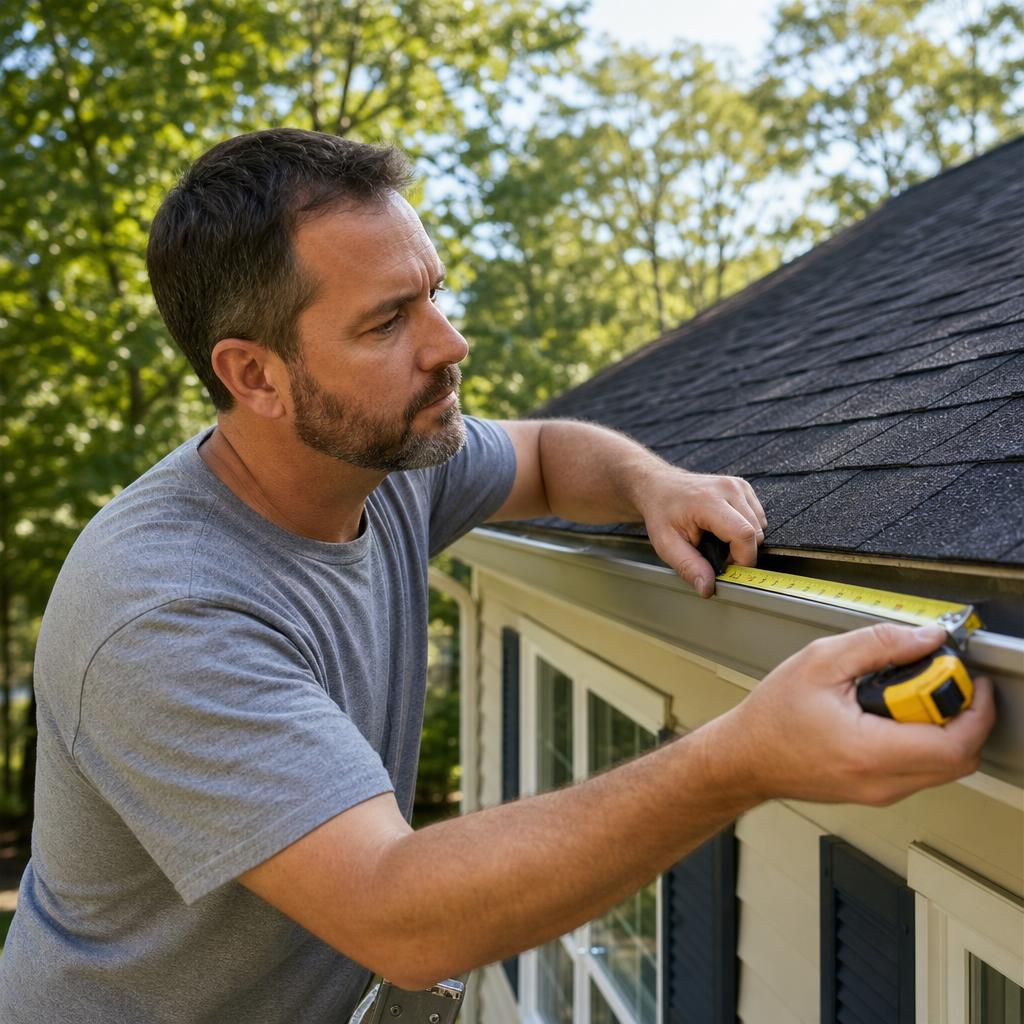
    Home size affects total roof surface area, which determines the volume of rainwater your gutters must handle. Knowing how to accurately measure your roof before installation is essential — understanding how to measure your home for new gutters ensures you get the right size system from the start and avoid costly mistakes.

    Conclusion

    The choice between 5-inch and 6-inch gutters comes down to three core factors: your roof size, your local rainfall intensity, and your roof pitch. For most standard homes in moderate climates, 5-inch gutters are entirely sufficient and offer a cost-effective solution. For larger homes, steeper roofs, or high-rainfall environments, 6-inch gutters provide the capacity and durability needed to protect your home long-term.

    Do not let price alone drive the decision. An undersized gutter system that overflows during every major storm will cost far more in water damage repairs than the savings from choosing a smaller size. Invest in the right system for your specific conditions, and your gutters will protect your home effectively for years to come.

    Material choice matters too. Whether you go with aluminum gutters, vinyl gutters, or steel, the quality of the material and the professionalism of the installation determine how long your system performs. If you are still weighing material options, reviewing how vinyl and aluminum gutters stack up against each other is a smart next step before making your final call.

    FAQ

    Are 6-inch gutters worth the extra cost?

    For the right home, absolutely. If your roof is large, steeply pitched, or located in a high-rainfall area, 6-inch gutters provide significantly better water flow and clog resistance than 5-inch systems. The upfront cost difference is typically modest compared to the potential cost of water damage from an overflowing or undersized gutter system. For smaller homes in moderate climates, the extra cost may not be justified.

    Do 5-inch gutters work for most homes?

    Yes. Five-inch gutters are the most commonly installed residential gutter size for good reason. They handle the drainage needs of the majority of homes in North America effectively. As long as your roof surface area is not excessively large and your local rainfall is not extreme, 5-inch gutters paired with properly sized downspouts will provide reliable roof drainage and foundation protection for many years.

    Can 6-inch gutters reduce clogging and overflow?

    Six-inch gutters do reduce the frequency of clogging compared to 5-inch systems because the wider channel gives debris more room before it creates a blockage. They also handle higher volumes of rainwater without overflowing during heavy storms. However, no gutter size eliminates clogging entirely. Adding gutter guards and scheduling regular maintenance are still necessary to keep any system performing at its best, regardless of size.

  • K Style vs Half Round Gutters: Which Should You Choose?

    K Style vs Half Round Gutters: Which Should You Choose?

    Choosing the right gutter style is one of those decisions that feels minor until you realize how much it affects your home’s drainage performance, maintenance load, and overall appearance. Most homeowners eventually narrow it down to two options: K-style gutters and half-round gutters. Both are widely available, both work well when properly installed, but they serve different homes and different priorities.

    The differences go beyond looks. These two gutter profiles handle rainwater differently, attract debris at different rates, cost different amounts to install, and pair better with specific architectural styles. Understanding those distinctions before you commit saves you money and frustration down the road.

    This guide breaks down every meaningful difference between K-style and half-round gutters so you can make a confident, informed choice. From gutter capacity and material options to fascia compatibility and long-term gutter maintenance, everything you need is here.

    K-Style vs Half-Round Gutters: Core Design and Performance Differences

    Shape, structure, and visual profile

    K-style gutters have a flat back, a flat bottom, and a decorative front profile that resembles crown molding. That distinctive shape is where the name comes from — the cross-section loosely resembles the letter K. This design gives them a clean, angular look that blends naturally with modern and traditional homes alike.

    Half-round gutters are exactly what they sound like: a semicircular trough that looks like a pipe cut lengthwise. The rounded shape is simpler, more classic, and has been used on homes for well over a century. It’s the style you’ll see on older craftsman bungalows, Victorian homes, and historic properties.

    Here’s a quick side-by-side overview of the two profiles:

    Feature K-Style Gutters Half-Round Gutters
    Shape Flat back, decorative front Semicircular trough
    Common sizes 5-inch, 6-inch 4-inch, 5-inch, 6-inch
    Best match Modern and contemporary homes Historic and traditional homes
    Material options Aluminum, vinyl, steel, copper Aluminum, copper, galvanized steel
    Gutter capacity Higher for same width Slightly lower for same width
    Cleaning ease Moderate Easier

    The structural difference matters more than most people expect. K-style gutters mount flush against the fascia board, which gives them added rigidity. Half-round gutters hang from brackets and sit away from the fascia, which affects both installation and long-term stability.

    Water capacity and flow handling

    K-style gutters hold more water volume than half-round gutters of the same width. A standard 5-inch K-style gutter can handle roughly 1.2 gallons per minute more than a 5-inch half-round under heavy rainfall. That difference adds up fast during intense storms.

    For homes with steep roof pitches or large roof surface areas, this capacity advantage is significant. More roof runoff hits the gutters faster, and K-style handles that surge better without overflowing.

    Half-round gutters aren’t weak performers, though. Their smooth, curved interior actually allows water to flow more freely with less turbulence. In moderate rainfall conditions, they drain efficiently and cleanly. The issue arises when volume spikes suddenly, which is where the K-style’s larger cross-section earns its keep.

    Downspouts connect to both styles, but the transition fitting differs. K-style gutters use a standard rectangular outlet that connects easily to most downspout configurations. Half-round gutters require a round outlet fitting, which can limit downspout placement options slightly.

    Debris buildup, clogging, and cleaning ease

    Half-round gutters have a natural advantage here. The smooth, curved interior doesn’t give debris much to grip onto. Leaves, twigs, and sediment tend to wash through more easily, and when you do need to clean them, a garden hose or scoop moves through the rounded trough without much resistance.

    K-style gutters have interior corners where the flat bottom meets the back wall. Those corners trap debris, especially wet leaves and compacted sediment. Over time, that buildup restricts water flow and can lead to water damage if left unaddressed.

    If your property has heavy tree coverage, the cleaning frequency difference between these two styles becomes a real factor. For homes surrounded by trees, looking into seamless gutter options designed for tree-heavy environments can help reduce clogging regardless of which profile you choose.

    Gutter guards work with both styles, but the installation process differs. K-style gutter guards are more widely available and easier to source. Half-round gutter guards require curved or clip-on designs that are less common and sometimes more expensive.

    Pricing, Installation, and Long-Term Maintenance

    Material and upfront cost differences

    K-style gutters are generally less expensive than half-round gutters at the same size and material grade. The manufacturing process for K-style is more standardized, which keeps material costs lower. Aluminum K-style gutters are the most affordable option on the market and remain the most commonly installed gutter type in residential construction.

    Half-round gutters cost more upfront, partly because they’re less mass-produced and partly because they’re often paired with premium materials like copper gutters. Copper half-round gutters are a popular choice for historic homes and high-end properties, but they carry a significant price premium over aluminum or vinyl options.

    Vinyl gutters are available in K-style but rarely in half-round, which limits budget-friendly options for homeowners who prefer the rounded profile. If you’re weighing material costs more broadly, a detailed breakdown of vinyl versus aluminum gutters can help clarify which material fits your budget and climate.

    Steel gutters are available in both styles but are heavier and more prone to rust without proper coating. They’re a durable choice in high-wind regions but require more maintenance than aluminum over time.

    Installation complexity and hardware requirements

    K-style gutters are easier and faster to install. They mount directly to the fascia board using hidden hangers, which are simple to space and secure. The flat back sits flush against the fascia, creating a stable, tight connection that holds up well over time.

    Half-round gutters require exposed mounting brackets that attach to the fascia or roof edge. These brackets must be spaced carefully to support the rounded trough without allowing it to sag. The installation takes more time and requires more precise alignment to look right and function properly.

    • K-style uses hidden hanger clips spaced every 24 to 36 inches
    • Half-round uses exposed half-round brackets spaced every 24 to 30 inches
    • Half-round brackets add visible hardware to the home exterior
    • K-style installation is more DIY-friendly for experienced homeowners
    • Half-round installation typically benefits from professional handling

    DIY gutter installation is more realistic with K-style than with half-round. The hidden hanger system is forgiving and widely documented. Half-round bracket alignment requires more experience to get right, especially on longer runs. Before starting any installation project, it’s worth understanding how to properly prepare your home for gutter installation to avoid common mistakes.

    Repair, upkeep, and replacement considerations

    K-style gutters are easier to repair and replace because parts are universally available. Sections, end caps, corners, and connectors are stocked at most hardware stores. If a section gets damaged, swapping it out is straightforward.

    Half-round gutter replacement parts are less standardized. Depending on the size and material, you may need to order specific components or work with a specialty supplier. Copper half-round gutters require soldering for proper repairs, which means professional service is almost always necessary.

    Gutter replacement costs also differ. Because K-style installation is faster and materials are cheaper, full replacement runs lower than half-round. For homeowners planning a long-term budget, that difference in gutter replacement cost is worth factoring in from the start.

    Unique Selling Points and Best-Fit Use Cases

    Why K-style suits most modern residential homes

    K-style gutters dominate the residential market for good reason. They hold more water, cost less, install faster, and work with virtually every modern home exterior. The decorative front profile mimics crown molding, which gives them a finished, intentional look that complements contemporary architecture without drawing attention to itself.

    Seamless gutters are almost exclusively made in K-style. Seamless gutter systems eliminate the joints where leaks typically start, making them a popular upgrade for homeowners who want low-maintenance performance. If you’re comparing seamless versus sectional options, the K-style profile gives you far more flexibility in that decision.

    • Works with most fascia board configurations
    • Available in seamless form for reduced leak risk
    • Handles high roof runoff volumes effectively
    • Compatible with the widest range of gutter guards
    • Easiest to source for repairs and replacements

    For new construction or full gutter replacement on a standard suburban home, K-style is the practical default. It performs well, looks appropriate, and keeps total project costs manageable.

    Why half-round fits historic and design-focused properties

    Featured image

    Half-round gutters have a visual authenticity that K-style simply can’t replicate. On a craftsman bungalow, a Victorian, or a colonial revival home, the rounded profile looks correct in a way that matters to preservation-minded homeowners and historic district requirements.

    Copper half-round gutters are particularly valued for their aging patina, which develops naturally over time and adds character to the home exterior. That patina also provides natural corrosion resistance, making copper one of the longest-lasting gutter materials available.

    Traditional homes with wood fascia and decorative trim details benefit from the exposed bracket hardware that half-round gutters require. On the right property, those brackets look intentional and elegant rather than utilitarian.

    • Authentic appearance for historic and period-style homes
    • Copper option develops a distinctive, durable patina
    • Smooth interior reduces debris adhesion
    • Preferred by historic preservation guidelines in many areas
    • Pairs well with decorative fascia and trim details

    If curb appeal and architectural authenticity are top priorities, half-round gutters justify their higher cost and more involved installation process.

    Climate, roof pitch, and drainage-demand scenarios

    Climate plays a real role in which gutter style performs better for your specific situation. In regions with heavy rainfall or frequent intense storms, gutter capacity becomes a critical factor. K-style gutters handle high-volume roof drainage better, making them the stronger choice in wet climates.

    In drier climates where rainfall is lighter and less frequent, the capacity advantage of K-style matters less. Half-round gutters perform perfectly well in those conditions, and the easier cleaning and smoother flow characteristics become more relevant.

    Roof pitch affects how fast water hits the gutters. Steeper roofs accelerate water flow, which means gutters need to handle a faster surge. K-style gutters manage that surge more effectively due to their higher gutter capacity. Shallow-pitched roofs produce slower, more gradual drainage where half-round gutters perform comparably.

    Feature-by-Feature Comparison Guide

    Appearance and curb appeal

    K-style gutters look clean and modern. The flat back and decorative front profile blend into the roofline without standing out. They’re versatile enough to work on ranch homes, colonials, craftsman styles, and contemporary builds.

    Half-round gutters make a visual statement. The rounded trough and exposed brackets are visible design elements, not just functional hardware. On the right home, that visibility is an asset. On a modern home with clean lines, it can look out of place.

    Color options are broader for K-style because aluminum K-style gutters are available in a wide range of factory-applied finishes. Half-round gutters in aluminum also come in various colors, but copper half-round is typically left to develop its natural patina rather than painted.

    Mounting method and fascia compatibility

    K-style gutters mount directly to the fascia board using hidden hangers. This method is clean, strong, and compatible with virtually all standard fascia configurations. The flush mounting also means K-style gutters don’t require as much clearance between the roofline and the gutter edge.

    Half-round gutters use exposed spike-and-ferrule systems or decorative half-round brackets. These brackets attach to the fascia or the roof rafter tails, depending on the home’s construction. The bracket system holds the gutter away from the fascia slightly, which can affect how water exits the roof edge.

    • K-style: hidden hangers, flush fascia mount, minimal visible hardware
    • Half-round: exposed brackets, slight standoff from fascia, decorative hardware visible
    • K-style works with standard and wide fascia boards equally well
    • Half-round bracket spacing must account for the gutter’s weight when full

    Fascia board condition matters for both styles. Rotted or damaged fascia should be repaired before any gutter installation to ensure a secure, lasting mount.

    Durability and material options

    Both gutter styles are available in aluminum, which remains the most popular gutter material for residential use. Aluminum gutters resist rust, stay lightweight, and hold paint well. They’re the practical choice for most homeowners regardless of which profile they prefer.

    Copper gutters are available in both styles but are far more commonly seen in half-round. Copper is exceptionally durable, naturally antimicrobial, and develops a protective patina over time. The tradeoff is cost — copper gutters run significantly higher than aluminum or steel options. For a thorough comparison of metal options, reviewing aluminum, copper, and steel gutters side by side gives a clear picture of what each material offers.

    Steel gutters offer strength in high-wind and high-impact environments but require galvanized or painted coatings to prevent rust. Vinyl gutters are lightweight and affordable but only available in K-style and less durable in extreme cold.

    • Aluminum: lightweight, rust-resistant, widely available in both styles
    • Copper: premium durability, natural patina, higher cost, mostly half-round
    • Steel: strong, heavy, requires rust protection, available in both styles
    • Vinyl: budget-friendly, K-style only, less durable in cold climates

    Conclusion

    K-style gutters are the right call for most homeowners. They handle more water, cost less, install faster, and work with a wider range of materials and gutter guard systems. If you’re replacing gutters on a standard residential home and performance is the priority, K-style delivers.

    Half-round gutters earn their place on historic properties, high-end homes, and any project where architectural authenticity matters more than cost efficiency. The smoother interior, classic profile, and copper material option make them the preferred choice for design-conscious homeowners who want their gutters to contribute to the home’s character.

    The best choice depends on your home’s architecture, your local climate, your budget, and how much maintenance you’re willing to take on. Both styles work well when properly installed and maintained. Knowing which one fits your specific situation is what makes the difference.

    FAQ

    Which gutter style costs less to install?

    K-style gutters cost less to install in most cases. The materials are more affordable, the installation process is faster, and labor costs are lower because hidden hanger systems are simpler to work with than half-round brackets. Aluminum K-style gutters represent the most budget-friendly option overall. Half-round gutters, especially in copper, carry significantly higher material and labor costs.

    Which option handles more water flow?

    K-style gutters handle more water flow than half-round gutters of the same width. The angular cross-section provides greater volume capacity, which matters most during heavy rainfall or on homes with large roof surface areas and steep pitches. A 6-inch K-style gutter outperforms a 6-inch half-round in high-volume drainage scenarios. For homes in wet climates or with complex rooflines, that capacity advantage is a meaningful reason to choose K-style.

    Which gutter style is better for historic homes?

    Half-round gutters are the standard choice for historic homes. The rounded profile matches the original gutter designs used on older architectural styles, and many historic preservation guidelines specifically require half-round profiles to maintain period accuracy. Copper half-round gutters are particularly appropriate for Victorian, craftsman, and colonial revival homes. They age gracefully, require minimal painting, and add authentic character that K-style gutters simply don’t replicate on traditional architecture.

  • Vinyl vs Aluminum Gutters: Which One Wins?

    Vinyl vs Aluminum Gutters: Which One Wins?

    Choosing the right gutter material is one of those home improvement decisions that feels simple on the surface but gets complicated fast. You’ve got two popular options sitting at the top of most homeowners’ lists: vinyl gutters and aluminum gutters. Both move rainwater away from your home, protect your fascia board, and keep water damage at bay — but they do it differently, and the differences matter more than most people realize.

    The gutter material you choose affects everything from your upfront gutter cost to how often you’ll be climbing a ladder for repairs. It affects how your home looks from the street, how well your gutters hold up through freeze-thaw cycles, and whether you’ll be replacing them in a decade or enjoying them for twenty-plus years. These aren’t small considerations.

    This guide breaks down vinyl vs aluminum gutters across every category that matters — durability, gutter installation, maintenance, cost, and long-term value. By the end, you’ll know exactly which material fits your home, your climate, and your budget.

    Vinyl vs Aluminum Gutters: Key Differences at a Glance

    Material makeup, appearance, and installation style

    Vinyl gutters are made from PVC plastic. They’re lightweight, come in pre-cut gutter sections, and snap together without the need for special tools. That makes them a popular pick for DIY installation projects. They typically come in white or a handful of basic colors, and they don’t require painting.

    Aluminum gutters are made from thin sheets of metal, usually between 0.025 and 0.032 inches thick. They’re available as seamless gutters — formed on-site by a contractor using a roll-forming machine — or as sectional pieces. Aluminum can be painted to match virtually any home exterior, giving it a clear edge in curb appeal flexibility.

    Here’s a quick side-by-side look at how these two gutter materials stack up at a basic level:

    Feature Vinyl Gutters Aluminum Gutters
    Material PVC plastic Aluminum metal
    Gutter Weight Very light Light to moderate
    Seamless Option No Yes
    DIY Friendly Very easy Moderate
    Rust and Corrosion None Minimal (with coating)
    Gutter Colors Limited Wide range
    Typical Gutter Lifespan 10–20 years 20–30 years

    How each gutter type performs in everyday home use

    In mild climates with moderate rainfall, vinyl gutters perform reliably. They handle rainwater flow well, resist rust and corrosion entirely, and stay low-maintenance for years. The problem shows up in extreme temperatures. Vinyl becomes brittle in very cold weather, which means it can crack under the weight of ice or snow — a real concern in northern climates.

    Aluminum gutters handle temperature swings much better. They expand and contract without cracking, making them a stronger performer across a wider range of climate conditions. They’re also better suited to handle the weight of gutter guards and debris without warping or pulling away from the fascia board.

    For everyday performance, aluminum edges ahead. It’s more adaptable, more structurally sound, and holds up better when conditions get tough.

    Feature-by-Feature Comparison

    Durability, lifespan, and resistance to weather

    Gutter durability is where the gap between these two materials becomes most obvious. Vinyl gutters typically last between ten and twenty years, depending on climate and maintenance. In warmer, more stable climates, they can hit the upper end of that range. In areas with harsh winters, expect the lower end.

    Aluminum gutters regularly last twenty to thirty years. Seamless aluminum gutters, in particular, tend to outlast sectional versions because they have fewer joints where leaks and weak points develop. The gutter material itself resists rust and corrosion well, especially when coated or painted properly.

    Gutter weight also plays into durability. Aluminum is heavier than vinyl, which actually works in its favor — it holds its shape better under load, whether that’s standing water, debris, or ice. Vinyl’s lighter gutter weight makes it easier to handle during installation but more vulnerable to physical stress over time.

    Leak potential, maintenance needs, and repairability

    Leak potential is directly tied to how gutters are constructed. Sectional gutters — whether vinyl or aluminum — have joints every few feet. Those joints are sealed with caulk or connectors, and over time, they can fail. When they do, you get leaks that can damage your fascia board, siding, and foundation if left unchecked.

    Seamless gutters eliminate most of those joints. Since seamless gutters are only available in aluminum (not vinyl), aluminum wins this category by default. If minimizing leak risk is a priority, seamless aluminum is the clear answer.

    Maintenance needs are similar for both materials. You’ll need to clean gutters regularly, check downspouts for clogs, and inspect for damage after major storms. The difference is in repairability. Vinyl sections are easy to replace — you can buy matching pieces at most hardware stores. Aluminum repairs are also manageable, though matching paint color can sometimes be tricky.

    If you’re planning a full gutter installation and want to understand what the process involves from start to finish, reading about what happens during a professional gutter installation can help you set realistic expectations before the crew arrives.

    Color options, customization, and curb appeal

    Vinyl gutters come in a limited palette — mostly white, brown, and a few neutral tones. You can’t paint vinyl effectively because paint doesn’t adhere well to PVC long-term. What you see at the store is essentially what you’re stuck with.

    Aluminum gutters offer far more flexibility. They come pre-finished in dozens of gutter colors, and they can be painted to match your home’s trim or siding exactly. For homeowners who care about curb appeal or are trying to match a specific exterior color scheme, aluminum is the obvious choice.

    Gutter size also matters for appearance and function. Both materials come in standard sizes — typically five-inch and six-inch profiles — but aluminum is more commonly available in custom gutter size configurations through contractors. This matters for larger roofs or homes with high rainfall volume.

    Pricing and Long-Term Value

    Upfront material and installation costs

    Vinyl gutters are cheaper upfront. Material costs for vinyl typically run lower per linear foot than aluminum. For a DIY installation, that cost gap widens further because you’re not paying a contractor for labor. Vinyl gutter sections are sold at most home improvement stores, and the installation process requires minimal tools.

    Featured image

    Aluminum gutters cost more per linear foot for materials, and if you’re going with seamless gutters, you’ll need a contractor with a roll-forming machine — which adds to the gutter installation cost. However, the price difference between vinyl and aluminum isn’t dramatic when you factor in sectional aluminum, which is also available for DIY projects.

    Here’s a general breakdown of what you might expect to pay:

    • Vinyl gutters (DIY): Lower material cost, minimal labor
    • Vinyl gutters (contractor): Moderate total cost
    • Aluminum sectional (DIY): Slightly higher material cost than vinyl
    • Aluminum seamless (contractor): Higher upfront cost, but fewer future repairs

    Replacement frequency and lifetime cost considerations

    This is where the math shifts in aluminum’s favor. Vinyl gutters may need gutter replacement in ten to fifteen years, especially in harsh climates. Aluminum gutters, properly maintained, can last twice as long. When you calculate the cost of two vinyl installations versus one aluminum installation, the lifetime gutter cost often comes out similar — or lower for aluminum.

    Gutter replacement also isn’t just about the gutters themselves. Every time you replace gutters, you’re paying for labor, disposal of old materials, and potential repairs to the fascia board or downspouts. Fewer replacements mean fewer of those hidden costs adding up over time.

    Budget-friendly choice vs value-focused choice

    If your budget is tight right now and you need gutters installed quickly and affordably, vinyl is a reasonable short-term solution. It protects your home from water damage, it’s easy to install, and it gets the job done without a major financial commitment.

    If you’re thinking long-term — especially if you plan to stay in your home for many years — aluminum delivers better value. The higher upfront gutter cost pays off through longer gutter lifespan, fewer repairs, and better performance across a wider range of climate conditions.

    The value-focused choice almost always points toward aluminum, particularly seamless aluminum installed by a qualified contractor. For guidance on finding the right professional, this resource on selecting a reliable gutter installation contractor walks through exactly what to look for before signing anything.

    Unique Selling Points and Best Use Cases

    When vinyl gutters make the most sense

    Vinyl gutters aren’t the wrong choice — they’re just the right choice for specific situations. Here’s where they genuinely shine:

    • Mild climates with minimal freeze-thaw cycles
    • Budget-conscious homeowners who need a quick, affordable solution
    • Rental properties where long-term investment isn’t the priority
    • DIY enthusiasts who want a manageable weekend project
    • Homes where gutter replacement is expected within the next decade anyway

    In a warm, stable climate, vinyl gutters can perform well for many years without significant issues. The rust and corrosion resistance is a genuine advantage — vinyl will never oxidize, pit, or develop the kind of surface degradation that metal gutters can experience without proper coating.

    When aluminum gutters are the better fit

    Aluminum gutters are the better fit for most homeowners in most situations. They handle climate extremes better, last longer, offer more customization, and are available in seamless form — which dramatically reduces leak risk.

    • Cold climates with heavy snow, ice, or freeze-thaw cycles
    • Homes with complex rooflines that need custom gutter size configurations
    • Homeowners focused on long-term value and minimal gutter replacement
    • Properties where curb appeal and color matching matter
    • Situations where a contractor is already being hired for the installation

    Aluminum also pairs better with gutter guards. The structural integrity of aluminum means it can support the added weight of gutter guard systems without sagging or pulling away from the fascia board. Vinyl, being lighter and less rigid, can struggle under that additional load over time.

    If you’re comparing aluminum to other metal options, it’s worth knowing how it stacks up against premium materials — a detailed look at how aluminum compares to copper and steel gutters can help you decide if upgrading further makes sense for your home.

    Best choice for DIY projects, harsh climates, and long-term homeowners

    For DIY installation, vinyl wins on ease. The gutter sections snap together, require no special tools, and are light enough to handle solo. If you’re comfortable on a ladder and want to tackle gutter installation yourself, vinyl is the more forgiving material to work with.

    For harsh climates, aluminum is the clear winner. Cold temperatures cause vinyl to become brittle and crack. Heavy snow loads can cause vinyl gutter sections to sag or separate at the joints. Aluminum handles these conditions without the same level of structural risk.

    For long-term homeowners, aluminum is the smarter investment. The longer gutter lifespan, better performance, and lower lifetime gutter cost make it the material that rewards patience and planning. If you’re going to be in your home for the long haul, spending a bit more upfront on aluminum — especially seamless aluminum — is a decision most homeowners don’t regret.

    Before starting any installation, it also helps to know your measurements. Getting accurate numbers for your roofline ensures you order the right amount of material and avoid costly waste. A practical guide on measuring your home for new gutters makes that process straightforward, even for first-timers.

    Conclusion

    Both vinyl and aluminum gutters do the fundamental job of moving rainwater away from your home and protecting it from water damage. The question isn’t whether one works and the other doesn’t — it’s which one works better for your specific situation.

    Vinyl gutters offer an affordable, DIY-friendly entry point that works well in mild climates and lower-stakes applications. Aluminum gutters offer superior durability, better climate resistance, more color options, and the seamless construction that reduces leak risk over the long term.

    For most homeowners, aluminum is the stronger choice. It costs more upfront but delivers better performance, longer gutter lifespan, and fewer headaches over time. If budget is the primary concern right now, vinyl is a workable solution — just go in knowing you’ll likely be replacing it sooner.

    The right gutter material is the one that fits your home, your climate, and your long-term plans. Use this comparison to make that call with confidence.

    FAQ

    Are vinyl gutters cheaper than aluminum gutters?

    Yes, vinyl gutters are generally cheaper upfront. The gutter cost per linear foot is lower for vinyl, and DIY installation is easier, which eliminates labor costs entirely. However, when you factor in gutter replacement frequency and lifetime costs, aluminum often comes out ahead financially over the long run.

    Which gutter material lasts longer?

    Aluminum gutters last longer. A typical aluminum gutter lifespan runs twenty to thirty years, while vinyl gutters typically last ten to twenty years. In harsh climates, vinyl’s lifespan can be significantly shorter due to cracking and brittleness caused by cold temperatures. Seamless aluminum gutters tend to last the longest of all common gutter options.

    Which is better for DIY installation?

    Vinyl gutters are better for DIY installation. The gutter sections are lightweight, easy to cut, and snap together without specialized tools. Aluminum sectional gutters can also be installed by a confident DIYer, but seamless aluminum gutters require a contractor with a roll-forming machine. If you’re planning a DIY project, vinyl is the more accessible starting point.

  • Aluminum vs Copper vs Steel Gutters Compared

    Aluminum vs Copper vs Steel Gutters Compared

    Choosing the right gutter material is one of those decisions that seems simple until you start comparing options side by side. Aluminum, copper, and steel each bring something different to the table — different price points, different lifespans, different maintenance demands, and very different aesthetics. Getting this choice wrong can mean premature replacement, ongoing repairs, or a gutter system that simply doesn’t hold up to your local climate.

    Most homeowners default to aluminum because it’s what contractors recommend most often. But that doesn’t mean it’s always the right fit. If you’re building a high-end home, restoring a historic property, or dealing with extreme weather, copper or steel might serve you far better over the long run. Understanding the real differences between these three gutter materials helps you make a smarter investment from the start.

    This guide breaks down each material honestly — covering durability, gutter cost, maintenance, lifespan, and curb appeal — so you can walk away with a clear picture of what works best for your specific situation. Before you commit to any material, it’s also worth understanding how gutter installation pricing breaks down per linear foot, since material choice directly affects your total project budget.

    Material Overview and Core Differences

    What Aluminum, Copper, and Steel Gutters Are Designed to Do

    All gutters share the same core job: channel rainwater away from your roof, fascia board, foundation, and landscaping. Roof drainage done poorly leads to water intrusion, wood rot, and structural damage over time. The material you choose determines how well your gutter system handles that job across years and decades of exposure.

    Aluminum gutters are the most widely installed option in residential construction. They’re lightweight, rust-resistant, and available in a wide range of gutter colors, making them a practical choice for most homes. Aluminum works well in moderate climates and handles standard rainfall without issue.

    Copper gutters are a premium product designed for longevity and visual impact. They’re used on high-end homes, historic restorations, and architectural projects where appearance matters as much as function. Copper requires no painting and develops a natural patina over time that many homeowners find attractive.

    Steel gutters — particularly galvanized steel — are built for strength. They’re heavier than aluminum and better suited to harsh weather environments where gutters face heavy snow loads, ice, or high winds. Steel is the go-to material when durability under physical stress is the top priority.

    Feature Aluminum Copper Steel
    Average Cost Per Linear Foot $4–$9 $25–$40 $8–$15
    Typical Lifespan 20–30 years 50–100 years 20–40 years
    Rust Resistance Excellent Excellent Moderate
    Dent Resistance Moderate Moderate High
    Maintenance Level Low Very Low Moderate
    Seamless Compatibility Yes Yes Limited

    How Each Material Differs in Weight, Strength, and Appearance

    Gutter weight affects both installation complexity and long-term performance. Aluminum is the lightest of the three, which makes it easier to handle during installation and puts less stress on the fascia board. That’s a practical advantage for most standard residential projects.

    Steel is significantly heavier, which adds strength but also increases the load on your home’s exterior. Galvanized steel gutters can weigh two to three times more than comparable aluminum sections, which means your fascia and mounting hardware need to be in solid condition before installation begins.

    Copper sits somewhere in between on weight but stands apart completely on appearance. Fresh copper has a warm, reddish-brown tone that gradually shifts to a blue-green patina as it oxidizes. That natural aging process is considered a feature, not a flaw, and it’s a big reason why copper remains popular on upscale and historic homes.

    Feature-by-Feature Comparison

    Durability, Rust Resistance, and Dent Resistance

    Gutter durability depends on how well a material holds up against moisture, physical impact, and temperature swings. Each of these three materials handles those stressors differently, and knowing the distinctions helps you match the right product to your environment.

    Aluminum doesn’t rust, which gives it a significant advantage over steel in wet climates. However, aluminum is softer than steel, which means it dents more easily under impact from falling branches, hail, or ladders leaned against the gutter during cleaning. Thicker gauge aluminum — typically 0.032 inches or higher — reduces this risk considerably.

    Copper shares aluminum’s rust resistance and actually performs better in coastal environments where salt air accelerates gutter corrosion on other materials. Copper is also prone to denting, though its natural patina helps conceal minor surface damage over time. The material itself doesn’t degrade from moisture exposure under normal conditions.

    Steel gutters, especially galvanized steel, offer the best dent resistance of the three. The tradeoff is gutter corrosion risk. Even galvanized coatings eventually wear through, particularly at cut edges and joints, allowing rust to develop. In humid or coastal climates, steel requires more vigilance to maintain its protective coating and prevent early failure.

    Maintenance, Installation, and Seamless System Compatibility

    Gutter maintenance requirements vary significantly by material. Aluminum and copper both require minimal upkeep beyond regular cleaning to remove debris and prevent clogs. Steel demands more attention because any breach in its protective coating creates a rust entry point that spreads if left untreated.

    Seamless gutters are formed on-site from a continuous roll of material, eliminating most of the joints where leaks typically develop. Aluminum is the most common material used in seamless gutter systems because it’s easy to form and widely available in seamless gutter machines. If you’re weighing your options between seamless and sectional systems, understanding the differences between seamless and sectional gutters is a useful starting point before choosing your material.

    Copper can also be fabricated into seamless systems, though fewer contractors have the equipment and expertise to do it. Steel is less commonly available in seamless form, which means steel installations often involve more joints and, consequently, more potential leak points over time.

    Gutter guards are compatible with all three materials, though installation methods vary. Adding gutter guards to any system reduces cleaning frequency and helps prevent debris buildup that leads to overflow and water damage.

    Downspouts are typically matched to the gutter material for both aesthetic and practical reasons. Mixing materials — like copper gutters with aluminum downspouts — can cause galvanic corrosion at connection points, so it’s worth discussing material consistency with your gutter contractor before finalizing your system design.

    Style, Patina, and Curb Appeal

    The visual impact of your gutter choice matters more than most people expect. Gutters run along the full perimeter of your roofline, making them a visible part of your home exterior. The wrong material or color can look out of place, while the right choice enhances the overall appearance of the property.

    Aluminum gutters come in a wide variety of gutter colors, typically available in painted finishes that can be matched to your trim, siding, or roofline. K-style gutters and half-round gutters are both available in aluminum, giving you flexibility in profile selection. The painted finish can fade or chip over time, but repainting is straightforward.

    Copper gutters require no painting and change appearance naturally over time. The progression from bright copper to dark brown to blue-green patina is a defining characteristic of the material. This aging process is irreversible, so homeowners who prefer a consistent, uniform look may find copper’s evolution challenging to manage.

    Steel gutters are available in painted finishes similar to aluminum, though the color selection may be more limited depending on the manufacturer. K-style and half-round profiles are available in steel, though half-round steel is less common. Steel’s heavier appearance can complement certain architectural styles, particularly on industrial or craftsman-style homes.

    Pricing, Lifespan, and Long-Term Value

    Upfront Cost Differences

    Gutter cost varies dramatically across these three materials. Aluminum is consistently the most affordable option, with installed costs typically ranging from four to nine dollars per linear foot depending on gauge, profile, and regional labor rates. For a standard home requiring around two hundred linear feet of gutters, aluminum represents a relatively modest investment.

    Steel gutters fall in the middle of the pricing range, generally running eight to fifteen dollars per linear foot installed. The higher cost reflects the material’s weight, the additional labor involved in handling heavier sections, and the more limited availability of seamless steel systems.

    Copper gutters are in a category of their own on price. Installed costs typically start around twenty-five dollars per linear foot and can reach forty dollars or more for complex rooflines or custom fabrication. A full copper gutter installation on a mid-sized home can easily run five to ten times the cost of an equivalent aluminum system.

    Expected Lifespan and Replacement Timing

    Featured image

    Gutter lifespan is where the cost comparison gets more nuanced. Aluminum gutters typically last twenty to thirty years with proper maintenance. That’s a solid run, but it does mean eventual gutter replacement is part of the ownership equation for most homeowners.

    Steel gutters can last twenty to forty years depending on climate and maintenance. In dry climates with minimal humidity, galvanized steel performs exceptionally well. In wet or coastal environments, the lifespan shortens considerably without consistent upkeep to protect the coating from corrosion.

    Copper gutters have the longest documented lifespan of any residential gutter material. Well-maintained copper systems routinely last fifty years, and installations on historic buildings have remained functional for a century or more. That extraordinary longevity fundamentally changes the long-term cost calculation for copper.

    Value Tradeoffs Over Time

    Calculating long-term value requires looking beyond the initial gutter cost. If aluminum gutters last twenty-five years and copper gutters last seventy-five years, a homeowner might replace aluminum three times before a copper system needs attention. Each replacement cycle includes both material and labor costs, which adds up significantly over decades.

    Steel offers a middle-ground value proposition. It costs more upfront than aluminum but delivers better physical durability in demanding climates. For homeowners in regions with heavy snowfall, frequent ice storms, or high winds, the added strength of steel can prevent damage that would require premature gutter replacement.

    The value of copper extends beyond pure function. Copper gutters are considered a premium feature that can increase perceived home value and appeal to buyers who appreciate quality craftsmanship. For homeowners planning to stay in their home long-term, copper’s combination of longevity and aesthetic appeal makes the higher upfront cost easier to justify.

    Best Use Cases and Buying Recommendations

    Which Gutter Material Fits Most Homes

    For the majority of residential properties, aluminum is the practical choice. It handles rainwater management effectively, resists rust, comes in a wide range of gutter colors, and works seamlessly with modern gutter installation equipment. The lower upfront cost makes it accessible for most budgets, and its compatibility with seamless systems reduces long-term leak risk.

    Aluminum is particularly well-suited to homes in moderate climates where extreme weather isn’t a regular concern. It’s also the easiest material to source, which means more gutter contractors can work with it and competitive pricing is easier to find. Before starting any installation project, taking time to measure your home accurately for new gutters ensures you get accurate material quotes and avoid costly miscalculations.

    • Best for budget-conscious homeowners
    • Ideal for moderate climates with standard rainfall
    • Works well with seamless gutter systems
    • Available in the widest range of gutter colors and profiles
    • Compatible with most gutter guards on the market

    When Copper Makes Sense

    Copper is the right choice when longevity and appearance are the primary drivers. Historic home restorations often require copper to maintain architectural authenticity. High-end new construction projects use copper to signal quality and add lasting visual distinction to the home exterior.

    Copper also makes sense for homeowners who want to install gutters once and never think about gutter replacement again. The fifty-plus year lifespan means copper can genuinely be a lifetime investment for many homeowners. When you factor in the cost of multiple aluminum replacement cycles, copper’s premium price becomes more defensible.

    • Historic or architecturally significant homes
    • High-end new construction projects
    • Homeowners prioritizing longevity over upfront cost
    • Coastal properties where salt air accelerates corrosion on other materials
    • Properties where curb appeal and resale value are key priorities

    When Steel Is the Better Choice

    Steel gutters earn their place in climates where physical durability matters most. Heavy snow loads, ice dams, falling branches, and high winds can dent or deform aluminum gutters that would otherwise perform fine in milder conditions. Steel’s superior dent resistance makes it a smarter choice in these environments.

    Working with a knowledgeable gutter installation contractor is especially important when choosing steel, since proper installation technique and coating maintenance are critical to preventing premature rust. Not all contractors have experience with steel systems, so vetting your installer carefully matters more with this material than with aluminum.

    • Northern climates with heavy snow and ice
    • Properties surrounded by mature trees with large branches
    • Homes where physical impact from debris is a recurring concern
    • Commercial or industrial properties requiring heavy-duty performance
    • Homeowners willing to invest in regular maintenance to prevent corrosion

    Conclusion

    Aluminum, copper, and steel each solve the same problem in different ways. Aluminum offers the best balance of cost, availability, and performance for most homeowners. Copper delivers unmatched longevity and visual appeal for those willing to invest at a higher level. Steel provides physical toughness that neither aluminum nor copper can match in demanding climates.

    The right choice depends on your budget, your climate, your home’s architectural style, and how long you plan to stay in the property. There’s no universally correct answer — only the answer that fits your specific situation. Take the time to get multiple quotes, ask your contractor about material options, and think beyond the upfront price to the full lifecycle cost of your gutter system.

    FAQ

    Which gutter material is the most affordable?

    Aluminum is consistently the most affordable gutter material across both material and installation costs. It typically runs four to nine dollars per linear foot installed, making it the default choice for budget-conscious homeowners. Steel falls in the middle range, and copper is the most expensive option by a significant margin.

    Which gutter material lasts the longest?

    Copper gutters have the longest lifespan of any residential gutter material, routinely lasting fifty years or more with minimal maintenance. Well-maintained copper installations on historic buildings have remained functional for over a century. Aluminum and steel both offer solid lifespans in the twenty to forty year range, but neither approaches copper’s longevity under normal conditions.

    Which gutter material is best for heavy rain or harsh weather?

    For heavy rainfall, all three materials perform adequately when properly sized and installed. For harsh weather involving snow, ice, and physical impact, galvanized steel offers the best dent resistance and structural strength. In coastal environments with salt air exposure, copper and aluminum both outperform steel due to their superior resistance to gutter corrosion. Matching the material to your specific climate conditions is the most reliable way to ensure long-term performance.

  • Seamless vs Sectional Gutters: Which Is Better?

    Seamless vs Sectional Gutters: Which Is Better?

    Choosing the right gutter system for your home is one of those decisions that seems simple on the surface but carries real long-term consequences. Get it wrong, and you’re dealing with water damage, rotting fascia boards, and costly repairs down the road. Get it right, and your home’s roof drainage works quietly and efficiently for decades.

    The debate between seamless gutters and sectional gutters has been ongoing among homeowners, contractors, and home improvement enthusiasts for good reason. Both systems move water away from your foundation, but they do it differently, cost differently, and require different levels of attention over time. Understanding those differences is what separates a smart purchase from an expensive mistake.

    This guide breaks down every meaningful distinction between the two systems — from gutter installation complexity and gutter cost to leak resistance, curb appeal, and long-term value. By the end, you’ll know exactly which option fits your home, your budget, and your lifestyle.

    Seamless vs Sectional Gutters: Core Differences

    How Each System Is Built

    Sectional gutters are pre-cut into standard lengths, typically between ten and twenty feet, and joined together on-site using connectors and sealant. They’re available in a wide range of gutter materials including vinyl gutters, aluminum gutters, steel gutters, and copper gutters. The sections snap or bolt together, making them accessible for DIY gutter installation without specialized equipment.

    Seamless gutters, by contrast, are fabricated on-site using a roll-forming machine that extrudes a continuous length of material — usually aluminum — to match the exact dimensions of your roofline. There are no gutter joints along the horizontal runs, only at corners and downspouts. This single-piece construction is what defines the seamless system and sets it apart from its sectional counterpart.

    The table below summarizes the fundamental structural differences between the two systems.

    Feature Seamless Gutters Sectional Gutters
    Construction Single continuous piece per run Pre-cut sections joined together
    Gutter Seams Only at corners and downspouts Every 10–20 feet along the run
    Common Materials Aluminum, steel, copper Vinyl, aluminum, steel, copper
    Installation Type Professional installation required DIY or professional
    Customization Cut to exact measurements Standard lengths, trimmed on-site
    Leak Points Minimal Multiple along each run

    Key Performance Differences

    The structural difference between these two systems directly affects how they perform under real-world conditions. Seamless gutters eliminate the majority of gutter seams, which are the primary failure points in any gutter system. Fewer seams mean fewer opportunities for gutter leaks to develop, especially during heavy rainfall.

    Sectional gutters rely on sealant and connectors at every joint. Over time, those connections expand and contract with temperature changes, causing the sealant to crack and the joints to separate. This is where most gutter leaks originate, and it’s the core performance disadvantage of the sectional design.

    Roof drainage efficiency also differs between the two. Seamless systems maintain a consistent interior profile with no ridges or lips at joints, allowing water to flow more freely toward downspouts. Sectional systems can develop small lips at joints where debris catches and clogged gutters become a recurring problem.

    Feature-by-Feature Comparison

    Leak Resistance and Durability

    Seamless gutters win this category decisively. With gutter joints only at corners and downspout connections, the number of potential leak points is dramatically reduced. Aluminum gutters in seamless form are particularly resistant to corrosion and can handle significant water volume without warping or pulling away from the fascia board.

    Sectional gutters, regardless of material, are inherently more vulnerable to gutter leaks. Every joint is a potential failure point, and even high-quality sealant degrades over time. Vinyl gutters are especially prone to cracking in cold climates, while steel gutters can rust at the joints if the protective coating is compromised.

    • Seamless aluminum gutters typically outlast sectional vinyl gutters by a significant margin
    • Copper gutters in seamless form offer the highest durability of any residential gutter material
    • Steel gutters in sectional form are vulnerable to rust at joint connections
    • Sectional gutter joints require periodic resealing to maintain water-tight performance

    Maintenance and Cleaning Needs

    Gutter maintenance is unavoidable regardless of which system you choose. Both types need regular cleaning to prevent clogged gutters from causing water damage to your home’s foundation, siding, and fascia board. However, the maintenance burden differs between the two systems in meaningful ways.

    Sectional gutters accumulate debris more readily at joints, where small lips and ridges catch leaves and twigs. This makes cleaning more time-consuming and increases the likelihood of blockages forming between scheduled cleanings. Gutter guards can help with both systems, but they’re particularly beneficial on sectional gutters where debris tends to concentrate at joints.

    Seamless gutters have a smoother interior profile, which allows debris to flush through more easily during rainfall. They still require regular cleaning, but the absence of interior ridges reduces the frequency of serious blockages. If your home is surrounded by trees, the best seamless gutters for tree-heavy properties are specifically designed to handle high debris loads with minimal maintenance intervention.

    Appearance and Curb Appeal

    Seamless gutters offer a cleaner, more polished appearance. Without visible joints running along the roofline, the gutter system looks like a single, intentional architectural element rather than a patchwork of connected pieces. This matters more than many homeowners initially expect, especially for homes with high curb appeal or those being prepared for resale.

    Sectional gutters show their joints, which can look utilitarian or dated depending on the home’s style. Over time, the joints may also discolor or stain differently than the surrounding sections, creating an uneven appearance. That said, sectional systems are available in a wide range of colors and profiles, giving homeowners flexibility in matching their home’s exterior.

    Both systems are available in standard colors, but seamless gutters can be custom-colored to match virtually any exterior palette. This level of customization is one reason seamless systems are the preferred choice for higher-end home improvement projects.

    Installation Process and Repairability

    Featured image

    Gutter installation differs significantly between the two systems. Sectional gutters can be purchased at most home improvement stores and installed by a motivated homeowner with basic tools. The process involves cutting sections to length, connecting them with joiners and sealant, and securing them to the fascia board with hangers. It’s genuinely accessible for DIY gutter installation.

    Seamless gutters require professional installation because the roll-forming machine that creates them is expensive and not practical for one-time residential use. A contractor brings the machine to your home, fabricates the gutters on-site, and installs them in a single visit. If you want to understand what that process looks like from start to finish, this overview of what to expect during gutter installation covers the full timeline and process in detail.

    Repairability is where sectional gutters have a genuine advantage. If one section is damaged, it can be removed and replaced without affecting the rest of the system. Seamless gutters, being continuous runs, require a contractor to fabricate and install a replacement section if damage occurs. This makes gutter repair more involved and typically more expensive for seamless systems.

    Pricing, Value, and Long-Term Costs

    Upfront Material and Installation Costs

    Sectional gutters are less expensive upfront. Vinyl gutters are the most affordable option, with material costs well below aluminum or steel alternatives. Aluminum sectional gutters fall in the mid-range, while copper gutters represent the premium tier regardless of whether they’re seamless or sectional.

    Seamless gutters cost more at the point of installation. The gutter cost includes both the material and the professional installation labor, since DIY is not a practical option. Aluminum gutters in seamless form are the most common and represent the best balance of cost and performance for most residential applications.

    • Sectional vinyl gutters: lowest upfront cost, shortest lifespan
    • Sectional aluminum gutters: moderate cost, reasonable durability
    • Seamless aluminum gutters: higher upfront cost, significantly longer lifespan
    • Seamless copper gutters: premium cost, exceptional longevity and appearance

    Ongoing Maintenance and Replacement Costs

    The true gutter cost comparison shifts when you factor in long-term expenses. Sectional gutters require more frequent resealing, more frequent gutter repair at joints, and earlier gutter replacement overall. These recurring costs add up over time and often exceed the initial savings from choosing a cheaper system.

    Seamless gutters require less frequent intervention. The reduced number of gutter seams means fewer leak points to monitor and repair. When properly installed and maintained, seamless aluminum gutters can last significantly longer than sectional vinyl or aluminum alternatives, reducing the frequency of full gutter replacement cycles.

    Foundation protection is another long-term cost factor. A gutter system that leaks or fails to direct water away from your home can cause serious water damage to your foundation, basement, and landscaping. The cost of foundation repair far exceeds any savings made on cheaper gutter materials, making this a critical consideration in the total cost equation.

    Which Option Offers Better Overall Value

    For most homeowners, seamless gutters offer better overall value when the full lifecycle cost is considered. The higher upfront investment is offset by lower maintenance costs, fewer repairs, and a longer service life. The reduction in gutter leaks alone can prevent significant water damage expenses over the years.

    Sectional gutters offer better value in specific scenarios — primarily for budget-constrained homeowners, rental properties, or situations where the home will be sold in the near term. In those cases, the lower upfront gutter cost makes more financial sense than investing in a premium seamless system.

    The value equation also depends on the quality of installation. Even the best seamless gutters will underperform if installed incorrectly, which is why selecting a qualified contractor matters as much as choosing the right system. Knowing the right questions to ask your gutter installer before hiring can help you avoid costly mistakes and ensure the job is done right the first time.

    Unique Selling Points and Best Use Cases

    When Seamless Gutters Make the Most Sense

    Seamless gutters are the right choice for homeowners who plan to stay in their home long-term and want a low-maintenance, high-performance system. They’re particularly well-suited for homes in regions with heavy rainfall, where roof drainage demands are high and gutter leaks can cause rapid water damage.

    Homes with complex rooflines benefit from seamless gutters because the on-site fabrication process allows for precise customization. Every run is cut to exact measurements, eliminating the guesswork and gaps that can occur when trimming sectional pieces to fit unusual angles or lengths. For larger properties, including multi-story homes that need reliable gutter performance, seamless systems provide the consistency and durability that sectional systems struggle to match.

    • Long-term homeowners seeking minimal maintenance
    • Homes in high-rainfall or high-debris environments
    • Properties with complex or custom rooflines
    • Homeowners prioritizing curb appeal and resale value
    • Situations where foundation protection is a primary concern

    When Sectional Gutters Are the Better Choice

    Sectional gutters make sense when budget is the primary constraint and the homeowner is comfortable with more frequent maintenance. They’re also the practical choice for DIY gutter installation enthusiasts who want to manage the project themselves without hiring a contractor.

    Rental properties and investment homes often benefit from sectional systems because individual sections can be replaced quickly and inexpensively when damaged. This repairability advantage makes sectional gutters a pragmatic choice in situations where cost control and ease of repair outweigh the performance benefits of seamless systems.

    • Budget-conscious homeowners with limited upfront funds
    • DIY homeowners comfortable with hands-on installation
    • Rental or investment properties where cost control is essential
    • Homes in mild climates with low rainfall and minimal debris
    • Short-term ownership situations where resale is planned soon

    Homeowner Profiles and Scenario-Based Recommendations

    A first-time homeowner on a tight budget who enjoys DIY projects will likely find sectional aluminum gutters to be a practical starting point. The lower gutter cost and accessible installation process make it a manageable home improvement project, and the system can be upgraded later when budget allows.

    A long-term homeowner with a mature tree canopy surrounding the property should strongly consider seamless gutters with gutter guards. The combination reduces clogged gutters, minimizes gutter maintenance frequency, and provides better protection against water damage over the long haul. The higher upfront investment pays off through reduced labor and repair costs over time.

    A homeowner preparing to sell their property within a few years faces a different calculation. New seamless gutters can improve curb appeal and signal to buyers that the home has been well-maintained, potentially adding value to the sale. However, if the existing sectional system is functional, a thorough cleaning and resealing may be sufficient to present the home well without the cost of full gutter replacement.

    Conclusion

    Both seamless and sectional gutters serve the same fundamental purpose — protecting your home from water damage by directing roof drainage away from your foundation, walls, and landscaping. The right choice depends on your budget, your plans for the property, your tolerance for maintenance, and the specific demands of your local climate.

    Seamless gutters deliver superior leak resistance, better appearance, and lower long-term maintenance costs. Sectional gutters offer lower upfront costs, DIY accessibility, and easier individual section repair. Neither system is universally superior — the best choice is the one that aligns with your specific situation.

    If you’re moving forward with a new gutter installation, take the time to evaluate contractors carefully. Understanding how to choose a qualified gutter installation contractor is just as important as choosing the right gutter system. A well-installed sectional system will outperform a poorly installed seamless one every time.

    FAQ

    Are seamless gutters worth the higher upfront cost?

    For most homeowners, yes. The higher upfront gutter cost is offset by lower maintenance expenses, fewer gutter repairs, and a longer service life. Seamless gutters eliminate the majority of gutter seams, which are the primary source of gutter leaks in sectional systems. Over a full ownership period, the total cost of ownership for seamless gutters is typically lower than for sectional alternatives, especially when you factor in the cost of water damage prevention and reduced gutter maintenance labor.

    Can sectional gutters be a good choice for DIY homeowners?

    Absolutely. Sectional gutters are one of the most accessible home improvement projects available to DIY homeowners. Vinyl gutters and aluminum gutters in sectional form are available at most hardware stores and can be installed with basic tools. The key is ensuring proper slope toward downspouts, secure attachment to the fascia board, and thorough sealing at all gutter joints. Regular inspection and resealing of those joints will extend the system’s performance life considerably.

    Which gutter type is easier to repair after damage?

    Sectional gutters are significantly easier to repair. Because the system is made up of individual sections connected at gutter joints, a damaged section can be removed and replaced without disturbing the rest of the installation. Gutter repair on a sectional system is a straightforward DIY task in most cases. Seamless gutters require a contractor to fabricate a replacement section on-site, making gutter repair more involved and more expensive. However, seamless systems typically require less frequent repair overall due to their superior construction and reduced number of failure points.

  • How to Measure Your Home for New Gutters

    How to Measure Your Home for New Gutters

    Getting accurate measurements before ordering new gutters saves you time, money, and frustration. A miscalculation by even a few feet can leave you short on materials or stuck with excess inventory you cannot return. Taking the time to measure carefully means your gutter installation goes smoothly from the first bracket to the final downspout connection.

    Most homeowners underestimate how involved the measuring process actually is. It is not just about walking around the house with a tape measure. You need to account for every roofline edge, every corner, every downspout location, and the specific drainage needs of your property before you place a single order.

    This guide walks you through the entire process step by step. Whether you are planning a full gutter replacement or adding gutters to a new addition, these instructions give you the confidence to measure accurately and order the right materials the first time.

    Gather Your Tools and Map the Roofline

    What you need before measuring

    Before you climb a ladder or pull out a tape measure, gather everything you need. Having the right tools on hand prevents multiple trips back inside and keeps the process efficient.

    Here is what you should have ready before starting:

    • A long tape measure, ideally 25 to 100 feet
    • A notepad and pencil or a measuring app on your phone
    • A simple sketch of your home’s roofline from a bird’s-eye view
    • A ladder if you plan to measure along the fascia board directly
    • A helper for longer runs or two-story homes

    A basic sketch does not need to be to scale. It just needs to show each wall, each roof edge, and where existing downspouts are located. This sketch becomes your working map throughout the entire measuring process.

    Tool Purpose Optional or Required
    Tape Measure Measure linear feet of each gutter run Required
    Notepad Record all measurements and notes Required
    Ladder Access fascia board for direct measurement Optional
    Helper Hold tape on long runs or two-story sections Recommended
    Roofline Sketch Map all gutter sections and downspout locations Required

    Identify every gutter run around the house

    A gutter run is any continuous section of gutter along a single roof edge. Before measuring anything, walk the entire perimeter of your home and identify each individual run. Mark them on your sketch as separate labeled sections.

    Most homes have four primary runs corresponding to each exterior wall. However, homes with garages, bump-outs, dormers, or additions will have additional runs that are easy to overlook. Missing even one short section can throw off your entire material order.

    Note where each run starts and ends. Runs typically begin at a high point and slope toward a downspout. Understanding the slope of each run helps you plan downspout placement and ensures proper drainage across the entire system.

    Measure the Linear Feet of Each Section

    Measure along the roof edge or from the ground

    The most accurate way to measure is directly along the fascia board where the gutters will actually attach. If you have safe ladder access, run your tape measure from one end of the fascia to the other and record the number in feet and inches.

    If ladder access is limited or the home is two stories, you can measure from the ground using a long tape measure held parallel to the wall. Ground-level measurements are slightly less precise but work well when you add a small buffer to your final totals. If you are planning a larger project, reading about the best gutter options for multi-level homes can help you understand what additional considerations apply to taller structures.

    For homes with a steep roof pitch, keep in mind that the actual roofline edge may be slightly longer than the wall below it. Roof pitch affects how much water flows into the gutters, which also influences gutter size selection later in the process.

    Record, round, and add all side measurements

    Write down every measurement as you go. Do not try to keep numbers in your head, especially on homes with complex layouts. Record each run by its label from your sketch, such as Front Left, Rear Right, or Garage Side.

    Follow these steps when recording your measurements:

    • Write the exact measurement in feet and inches for each run
    • Round each measurement up to the nearest foot
    • Add all rounded measurements together for a subtotal
    • Add ten percent to your subtotal as a waste and overlap buffer
    • This final number is your total linear feet to order

    Rounding up and adding a buffer protects you from coming up short. Gutters are sold in standard lengths, and you will almost always need to cut sections to fit. That cutting creates waste, and the buffer accounts for it without leaving you scrambling for extra material mid-installation.

    Account for Downspouts, Corners, and Special Layouts

    Count downspouts and note their locations

    Downspouts are not just accessories. They are critical components of your drainage system, and their placement directly affects how well your gutters manage water flow. Every gutter run needs at least one downspout, and longer runs typically need two.

    A general rule is one downspout for every 30 to 40 linear feet of gutter. In areas with heavy rainfall, you may need downspouts more frequently to prevent overflow. Mark each planned downspout location on your sketch and count the total number you will need.

    Featured image

    Each downspout requires an outlet hole in the gutter, an elbow fitting at the top, a length of downspout pipe, and an elbow at the bottom to direct water away from the foundation. Measure the height from the gutter to the ground at each downspout location so you order the correct pipe lengths. Before your installation day arrives, it helps to review how to prepare your home for gutter installation so everything is ready when the crew shows up.

    Handle corners, bump-outs, garages, and additions

    Corners are where two gutter runs meet at an angle. Every inside or outside corner requires a corner piece, and these are sold separately from straight gutter sections. Count every corner on your roofline sketch and note whether each one is an inside corner or an outside corner.

    Bump-outs, bay windows, garages, and additions all create additional corners and shorter gutter runs that are easy to miss during a quick walkthrough. Walk slowly around the entire structure and look up at every roofline transition. Each one likely needs its own measurement and its own set of fittings.

    Garages attached to the main house often have their own separate roofline that drains independently. Treat the garage as its own set of gutter runs and measure it separately. Then add those measurements to your main house totals when calculating your final material order.

    Check Measurements Before Ordering New Gutters

    Compare your totals with common gutter sizes and drainage needs

    Once you have your total linear feet, you need to choose the right gutter size. The two most common residential sizes are five-inch and six-inch gutters. Five-inch K-style gutters handle most standard homes well, while six-inch gutters are better suited for larger roof surfaces or high-rainfall regions.

    Roof pitch also plays a role in sizing. A steeper roof pitch means water rushes off faster and in greater volume, which can overwhelm a smaller gutter. If your home has a steep slope, consider sizing up to ensure adequate water flow capacity and reduce the risk of overflow during heavy storms.

    • Five-inch gutters work well for roofs under 1,000 square feet per section
    • Six-inch gutters handle larger roof areas and steeper pitches more effectively
    • Aluminum gutters are the most popular choice for residential use due to durability and cost
    • Vinyl gutters are lightweight and affordable but may not hold up as well in extreme temperatures
    • Seamless gutters reduce leak points and are cut to exact length on-site

    If you are considering seamless gutters and your home is surrounded by trees, understanding how debris affects gutter performance matters. You can explore seamless gutter options designed for tree-heavy properties to find a system that balances performance with low maintenance. Gutter guards are also worth factoring into your planning if leaf buildup is a recurring issue on your property.

    Do not forget to account for hangers when calculating materials. Hangers secure the gutter to the fascia board and should be spaced every 24 to 36 inches along each run. Divide your total linear feet by two to get a rough estimate of how many hangers you will need.

    Avoid common measurement mistakes

    Even careful homeowners make measurement errors that cause problems during installation. Knowing the most common mistakes helps you avoid them before they cost you time or money.

    • Forgetting to measure short sections near corners or dormers
    • Measuring wall length instead of actual fascia board length
    • Failing to account for the slope when measuring steep rooflines
    • Not counting all downspout locations before ordering pipe
    • Ordering gutter material without adding a waste buffer
    • Confusing inside corners with outside corners when counting fittings

    Double-check every number before placing your order. Walk the perimeter one more time with your sketch in hand and confirm that every run, every corner, and every downspout location is accounted for. A second walkthrough takes ten minutes and can prevent a costly reorder.

    Conclusion

    Measuring for new gutters is a straightforward process when you approach it methodically. Start with the right tools, map every run, measure carefully, and account for all the fittings and downspouts your system requires. Adding a buffer to your totals ensures you have enough material without running short mid-project.

    Accurate measurements set the foundation for a successful installation. If you are hiring a contractor, having your own measurements ready helps you ask better questions and verify that quotes are based on accurate figures. You can learn more about what to ask before signing anything by reviewing key questions to ask your gutter installer before the work begins. Taking ownership of this step puts you in control of the entire project from start to finish.

    FAQ

    Do I need to use a ladder to measure for new gutters?

    Not necessarily. You can measure most gutter runs from the ground using a long tape measure held parallel to the wall. Ground measurements are slightly less precise than measuring directly along the fascia board, so add a small buffer to your totals. For two-story homes or complex rooflines, having a helper and a ladder improves accuracy significantly.

    Should I round up when measuring gutter length?

    Yes, always round up to the nearest foot for each individual run. After adding all runs together, add an additional ten percent to your total to account for cutting waste and overlaps at joints. Ordering slightly more than you think you need is far less costly than running short and placing a second order mid-installation.

    How do I measure a house with multiple rooflines?

    Treat each roofline section as its own separate gutter run. Walk the entire perimeter and identify every distinct roof edge, including those over garages, additions, and bump-outs. Sketch each section, measure it individually, and then add all measurements together. Count corners and downspout locations for each section separately before combining your totals for the final material order.

  • How to Prepare Your Home for Gutter Installation

    How to Prepare Your Home for Gutter Installation

    Getting new gutters installed is one of the smartest investments you can make in your home’s exterior. Proper water drainage protects your foundation, prevents soil erosion, and keeps your basement dry. But the success of any gutter installation project depends heavily on how well you prepare before the crew arrives.

    Most homeowners focus entirely on choosing the right contractor and forget that their own preparation work matters just as much. A cluttered work area, damaged fascia boards, or unresolved permit questions can slow down the job, increase costs, and create headaches for everyone involved. Taking a few hours to get your home ready makes the entire process smoother and faster.

    This guide walks you through every step of preparation, from inspecting your roofline to coordinating with your installer on the day of the job. If you’re still in the planning phase and want to understand what the full installation process looks like from start to finish, that context will help you follow along with everything covered here.

    Assess Your Home and Plan the Installation

    Before any physical prep work begins, you need a clear picture of your home’s current condition and what the new gutter system will require. Skipping this step leads to surprises mid-project that cost time and money.

    Inspect roofline, fascia, and soffits for damage

    Walk the full perimeter of your home and look up at the roofline carefully. You’re checking for sagging sections, rotted wood, peeling paint, and any areas where the fascia board has pulled away from the structure.

    Damaged fascia is one of the most common reasons gutter installations get delayed. If the mounting surface isn’t solid, gutter hangers won’t hold properly, and the entire system can fail within a season. Soffits should also be checked for moisture damage, pest intrusion, or cracks that could worsen once new gutters redirect water flow.

    Look at the roof overhang as well. The edge of your roof needs to sit correctly above the gutter channel so rainwater flows in rather than behind the system. Note any areas where shingles are curling or missing, since those spots will affect how water enters the gutter.

    Evaluate drainage needs and downspout locations

    Think about where water currently pools around your home after heavy rain. Those low spots tell you exactly where your drainage system is failing and where downspouts need to be positioned.

    Downspouts should discharge water at least four to six feet away from your foundation. Foundation protection depends entirely on proper placement, so this isn’t a detail to leave entirely to the installer without your input. Walk your yard and identify any existing drainage paths, buried utilities, or garden beds that could affect where downspouts can realistically go.

    Consider gutter slope as well. A proper gutter pitch of roughly a quarter inch per ten feet ensures water moves toward the downspout rather than sitting and overflowing. Your installer will handle the technical measurements, but understanding the concept helps you have a more informed conversation.

    Confirm gutter style, materials, and contractor details

    Use this table to compare the most common gutter materials before finalizing your choice:

    Material Durability Cost Level Best For
    Aluminum Gutters High Moderate Most climates
    Vinyl Gutters Moderate Low Mild climates
    Seamless Gutters Very High Moderate-High Leak prevention
    Steel Gutters Very High High Harsh weather

    Seamless gutters are the most popular choice for homeowners who want minimal maintenance and fewer leak points. Aluminum gutters offer a strong balance of durability and affordability for most residential applications.

    Confirm your contractor’s license, insurance, and warranty terms before the project begins. If you haven’t finalized your hiring decision yet, reviewing the right questions to ask before hiring a gutter installer can save you from costly mistakes down the road.

    Clear and Protect the Work Area

    A clean, accessible work area isn’t just courteous to your installer. It directly affects how efficiently the job gets done and how safely the crew can operate around your property.

    Move vehicles and outdoor furniture away from the house

    Park all vehicles on the street or at least thirty feet from the house on installation day. Installers work with long sections of gutter material, ladders, and power tools, and a car parked close to the home creates a real obstacle and a liability risk.

    Patio furniture, grills, planters, and decorative items along the home exterior should all be relocated the evening before. This includes anything stored under eaves or against exterior walls. The crew needs unobstructed movement along every side of the house.

    Don’t assume the installer will move things for you. Most contractors will ask you to clear the area as a condition of the job, and arriving to a cluttered site can delay the start time or result in additional charges.

    Remove obstacles along exterior walls and walkways

    Check every walkway that runs alongside your home. Garden hoses, extension cords, potted plants, and decorative edging all become tripping hazards when workers are carrying materials and climbing ladders repeatedly throughout the day.

    Debris removal from the immediate work zone is your responsibility as the homeowner. Clear any mulch piles, stacked firewood, or seasonal items stored against the house. The cleaner the path, the faster and safer the installation proceeds.

    Also check for any low-hanging branches that extend over the roofline or along the fascia. Branches that interfere with ladder placement or gutter runs should be trimmed before the crew arrives.

    Protect landscaping, utilities, and outdoor equipment

    Gutter installation involves old hardware removal, drilling, and sometimes debris falling from the roofline. Delicate plants, flower beds, and shrubs directly below the work area can take damage if left unprotected.

    Lay down drop cloths or old tarps over garden beds running along the foundation. Move potted plants entirely out of the work zone. If you have an irrigation system with above-ground components or outdoor lighting fixtures near the roofline, flag them clearly so the crew knows to work around them.

    Locate your utility shutoffs before the job starts. Knowing where your outdoor electrical outlets and water lines run prevents accidental damage during ladder placement and anchor drilling.

    Prepare Existing Gutters, Roof Edge, and Access

    If your home already has gutters, the old system needs to be addressed before new installation begins. This phase also covers the structural repairs that create a solid foundation for the new system.

    Featured image

    Safely remove or secure old gutters and hardware

    Some contractors include old gutter removal in their quote, while others charge separately or expect the homeowner to handle it. Clarify this before the project starts so there are no surprises on installation day.

    If you’re removing gutters yourself, ladder safety is non-negotiable. Use a stable, properly rated ladder with a standoff to keep it away from the fascia. Work with a partner who can stabilize the base and help manage the weight of removed sections.

    Old gutter brackets, screws, and hangers left in the fascia board need to be fully removed or properly set before new gutter hangers go in. Leftover hardware creates uneven mounting surfaces and weakens the new installation.

    Repair fascia, soffits, and trim for a solid mounting surface

    Any rot, soft spots, or water damage in the fascia board must be repaired before new gutters go up. Gutter brackets and hangers anchor directly into this wood, and a compromised surface means the system won’t hold under the weight of water and debris.

    Replace rotted sections with pressure-treated lumber or a composite material rated for exterior use. Prime and paint the new wood to match the existing trim and to protect it from future moisture exposure. This is also a good time to address any weatherproofing gaps around trim joints and corners.

    Soffits that show signs of moisture damage or pest activity should be repaired at the same time. Addressing both surfaces together prevents you from having to remove new gutters later just to fix underlying structural issues.

    Plan safe access for ladders, scaffolding, and work paths

    For single-story homes, standard extension ladders are typically sufficient. For taller structures, if you’re curious about specific equipment and timing considerations, reviewing details about gutter options and installation factors for two-story homes gives useful context on what professional crews typically require.

    Clear a path from the street or driveway to each side of the house. Installers need to transport long gutter sections, and tight gates, low fences, or locked side yards can block access entirely. Unlock gates the morning of the job and prop them open if needed.

    Mark any underground utilities, irrigation lines, or buried cables near the foundation. Ladder feet placed on unmarked lines can cause damage that becomes a separate repair bill.

    Coordinate with Your Installer and Final Checks

    The day before installation, run through a final coordination checklist with your contractor. Clear communication at this stage prevents the most common day-of problems.

    Review layout, downspout placement, and water discharge

    Walk the property with your installer or review the layout plan they’ve provided. Confirm that every downspout location makes sense for your yard’s drainage patterns and that water discharge points won’t direct flow toward your foundation or a neighbor’s property.

    Discuss gutter slope and pitch adjustments for any sections of the roofline that present challenges. Rainwater management depends on getting these angles right, and a quick walkthrough conversation is far easier than fixing a poorly pitched run after installation is complete.

    Ask about gutter guards if you haven’t already decided. Homes surrounded by heavy tree cover benefit significantly from leaf protection systems, and adding guards during initial installation is always more cost-effective than retrofitting them later.

    Confirm permits, HOA rules, and property protection

    Some municipalities require permits for gutter installation, particularly when significant structural repairs are involved. Your contractor should handle permit pulling, but confirm this is included in the scope of work.

    If your home is in a community with an HOA, check the guidelines for approved gutter materials, colors, and downspout placement. Violations can result in fines or mandatory removal, so getting approval in writing beforehand protects you. Home inspection records can also be useful here if your HOA requires documentation of existing conditions.

    Ask your contractor how they plan to protect your driveway, siding, and landscaping during the job. Professional crews should use drop cloths and take care around finished surfaces, but setting this expectation explicitly avoids misunderstandings.

    Prepare your household for installation day

    Let everyone in the household know what to expect. Installation involves noise, ladder movement around the exterior, and periodic interruptions if workers need access to a hose bib or electrical outlet.

    Keep pets indoors throughout the workday. Loose dogs create safety hazards for workers on ladders, and the noise and activity can cause stress for animals. Secure any pet doors that open to the work area.

    Plan for the job to take most of the day. Knowing how long gutter installation typically takes helps you set realistic expectations and arrange your schedule accordingly so you’re available if the crew has questions.

    Conclusion

    Preparing your home properly before gutter installation is straightforward work that pays off in a faster, cleaner, and more durable result. Inspect your fascia and soffits, clear the work area, address any structural repairs, and communicate clearly with your installer before the job begins.

    The homeowners who get the best outcomes are the ones who treat preparation as part of the project, not an afterthought. A little effort before the crew arrives means fewer delays, fewer surprises, and a gutter system that performs exactly as it should for years to come.

    FAQ

    Do I need to be home during gutter installation?

    You don’t need to be present the entire time, but being available at the start and end of the job is strongly recommended. The crew may have questions about access, downspout placement, or unexpected conditions they discover during the work. Being reachable by phone throughout the day is the minimum expectation.

    Should I repair fascia and soffits before or after scheduling the installer?

    Assess the condition of your fascia and soffits before scheduling, but you don’t necessarily need repairs completed first. Many gutter contractors can handle minor fascia repairs as part of the project scope. For significant structural damage, completing repairs beforehand ensures the installer can begin gutter work immediately without delays.

    How can I protect my landscaping and exterior surfaces during the project?

    Cover garden beds and delicate plants with drop cloths or tarps before the crew arrives. Move potted plants and outdoor décor completely out of the work zone. Ask your contractor specifically how they protect driveways and siding from debris and tool damage, and confirm their cleanup process for removed hardware and old gutter sections.